
Il-granit huwa tip ta’ blat igneju estratt għas-saħħa estrema tiegħu, id-densità, id-durabbiltà, u r-reżistenza għall-korrużjoni. Iżda l-granit huwa wkoll versatili ħafna – mhux biss għal kwadri u rettangoli! Fil-fatt, naħdmu b’kunfidenza ma’ komponenti tal-granit inġinerizzati f’forom, angoli, u kurvi tal-varjazzjonijiet kollha fuq bażi regolari – b’riżultati eċċellenti.
Permezz tal-ipproċessar avvanzat tagħna, l-uċuħ maqtugħin jistgħu jkunu eċċezzjonalment ċatti. Dawn il-kwalitajiet jagħmlu l-granit il-materjal ideali biex jinħolqu bażijiet ta' magni u komponenti tal-metroloġija ta' daqs u disinn apposta. Il-granit huwa:
■ li jista' jiġi mmaxinjat
■ preċiżament ċatt meta maqtugħ u lest
■ reżistenti għas-sadid
■ durabbli
■ dejjiema
Il-komponenti tal-granit huma wkoll faċli biex jitnaddfu. Meta toħloq disinji apposta, kun żgur li tagħżel il-granit għall-benefiċċji superjuri tiegħu.
STANDARDS / APPLIKAZZJONIJIET TA' UTILIZZ GĦOLJA
Il-granit utilizzat minn ZHHIMG għall-prodotti standard tagħna tal-pjanċi tal-wiċċ għandu kontenut għoli ta' kwarz, li jipprovdi reżistenza akbar għall-użu u l-ħsara. Il-kuluri Superjuri Iswed tagħna għandhom rati baxxi ta' assorbiment tal-ilma, u jimminimizzaw il-possibbiltà li l-kejl ta' preċiżjoni tiegħek jissadddu waqt li jitwaħħlu fuq il-pjanċi. Il-kuluri tal-granit offruti minn ZHHIMG jirriżultaw f'inqas dija, li jfisser inqas għeja għall-għajnejn għall-individwi li jużaw il-pjanċi. Għażilna t-tipi ta' granit tagħna filwaqt li kkunsidrajna l-espansjoni termali fi sforz biex inżommu dan l-aspett minimu.
APPLIKAZZJONIJIET DOGANALI
Meta l-applikazzjoni tiegħek teħtieġ pjanċa b'forom apposta, inserzjonijiet bil-kamin, slots jew makkinarju ieħor, tkun trid tagħżel materjal bħal Black Jinan Black. Dan il-materjal naturali joffri ebusija superjuri, tnaqqis eċċellenti tal-vibrazzjoni, u makkinabbiltà mtejba.
Huwa importanti li wieħed jinnota li l-kulur waħdu mhuwiex indikazzjoni tal-kwalitajiet fiżiċi tal-ġebla. B'mod ġenerali, il-kulur tal-granit huwa direttament relatat mal-preżenza jew l-assenza ta' minerali, li jistgħu ma jkollhom l-ebda effett fuq il-kwalitajiet li jagħmlu materjal tajjeb għall-pjanċi tal-wiċċ. Hemm graniti roża, griżi u suwed li huma eċċellenti għall-pjanċi tal-wiċċ, kif ukoll graniti suwed, griżi u roża li mhumiex adattati għal applikazzjonijiet ta' preċiżjoni. Il-karatteristiċi kritiċi tal-granit, kif għandhom x'jaqsmu mal-użu tiegħu bħala materjal għall-pjanċi tal-wiċċ, m'għandhom x'jaqsmu xejn mal-kulur, u huma kif ġej:
■ Ebusija (deflessjoni taħt tagħbija - indikata mill-Modulu tal-Elastiċità)
■ Ebusija
■ Densità
■ Reżistenza għall-użu
■ Stabbiltà
■ Porożità
Ittestjajna ħafna materjali tal-granit u qabbilna dawn il-materjali. Fl-aħħar ir-riżultat huwa li l-granit iswed ta' Jinan huwa l-aqwa materjal li qatt rajna. Il-granit iswed Indjan u l-granit tal-Afrika t'Isfel huma simili għall-Granit Iswed ta' Jinan, iżda l-proprjetajiet fiżiċi tagħhom huma inqas minn dawk tal-Granit Iswed ta' Jinan. ZHHIMG se tkompli tfittex aktar materjal tal-granit fid-dinja u tqabbel il-proprjetajiet fiżiċi tagħhom.
Biex titkellem aktar dwar il-granit li huwa tajjeb għall-proġett tiegħek, jekk jogħġbok ikkuntattjanainfo@zhhimg.com.
Manifatturi differenti jużaw standards differenti. Hemm ħafna standards fid-dinja.
L-Istandard DIN, ASME B89.3.7-2013 jew l-Ispeċifikazzjoni Federali GGG-P-463c (Pjanċi tal-Wiċċ tal-Granit) eċċ. bħala bażi għall-ispeċifikazzjonijiet tagħhom.
U nistgħu nimmanifatturaw pjanċa ta' spezzjoni ta' preċiżjoni tal-granit skont il-ħtiġijiet tiegħek. Merħba tikkuntattjana jekk trid tkun taf aktar informazzjoni dwar aktar standards.
Il-pjanità tista' titqies bħala l-punti kollha fuq il-wiċċ li jinsabu f'żewġ pjani paralleli, il-pjan bażi u l-pjan tas-saqaf. Il-kejl tad-distanza bejn il-pjani huwa l-pjanità ġenerali tal-wiċċ. Dan il-kejl tal-pjanità ġeneralment iġorr tolleranza u jista' jinkludi denominazzjoni ta' grad.
Pereżempju, it-tolleranzi tal-flatness għal tliet gradi standard huma definiti fl-ispeċifikazzjoni federali kif determinat mill-formula li ġejja:
■ Grad AA tal-Laboratorju = (40 + kwadrat djagonali/25) x .000001" (unilaterali)
■ Grad ta' Spezzjoni A = Grad ta' Laboratorju AA x 2
■ Kamra tal-Għodda Grad B = Grad tal-Laboratorju AA x 4.
Għal pjanċi tal-wiċċ ta' daqs standard, aħna niggarantixxu tolleranzi ta' ċattità li jaqbżu r-rekwiżiti ta' din l-ispeċifikazzjoni. Minbarra l-ċattità, l-ASME B89.3.7-2013 u l-Ispeċifikazzjoni Federali GGG-P-463c jindirizzaw suġġetti li jinkludu: preċiżjoni tal-kejl ripetut, proprjetajiet tal-materjal tal-graniti tal-pjanċi tal-wiċċ, finitura tal-wiċċ, post tal-punt ta' appoġġ, ebusija, metodi aċċettabbli ta' spezzjoni, installazzjoni ta' inserzjonijiet bil-kamin, eċċ.
Il-pjanċi tal-wiċċ tal-granit ZHHIMG u l-pjanċi tal-ispezzjoni tal-granit jissodisfaw jew jaqbżu r-rekwiżiti kollha stabbiliti f'din l-ispeċifikazzjoni. Fil-preżent, m'hemm l-ebda speċifikazzjoni li tiddefinixxi l-pjanċi tal-angolu tal-granit, il-paralleli, jew il-kwadri ewlenin.
U tista' ssib il-formuli għal standards oħra f'NIŻŻEL.
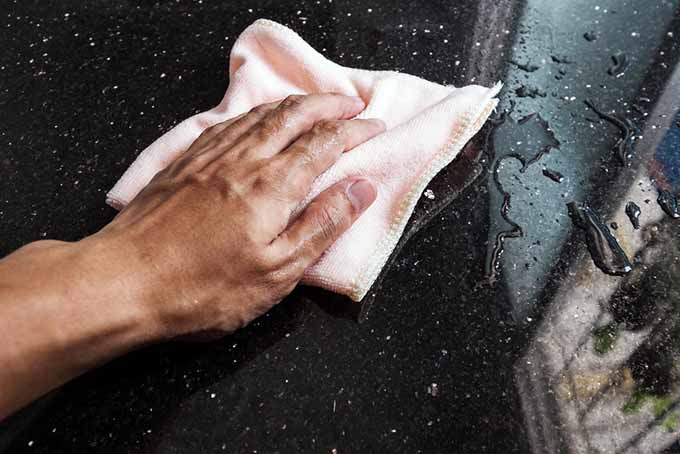
L-ewwelnett, huwa importanti li l-pjanċa tinżamm nadifa. It-trab abrażiv fl-arja ġeneralment ikun l-akbar sors ta’ xedd u kedd fuq pjanċa, peress li għandu t-tendenza li jidħol fil-biċċiet tax-xogħol u fl-uċuħ ta’ kuntatt tal-gages. It-tieni, għatti l-pjanċa tiegħek biex tipproteġiha mit-trab u l-ħsara. Il-ħajja tal-użu tista’ tiġi estiża billi tgħatti l-pjanċa meta ma tkunx qed tintuża, billi ddawwar il-pjanċa perjodikament sabiex żona waħda ma tirċevix użu eċċessiv, u billi tissostitwixxi l-pads tal-kuntatt tal-azzar fuq il-gaging b’pads tal-karbur. Ukoll, evita li tpoġġi ikel jew soft drinks fuq il-pjanċa. Innota li ħafna soft drinks fihom jew aċidu karboniku jew fosforiku, li jista’ jxolji l-minerali aktar rotob u jħalli ħofor żgħar fil-wiċċ.
Dan jiddependi minn kif qed tintuża l-pjanċa. Jekk possibbli, nirrakkomandaw li l-pjanċa titnaddaf fil-bidu tal-ġurnata (jew tax-xift tax-xogħol) u mill-ġdid fl-aħħar. Jekk il-pjanċa titħammeġ, partikolarment b'fluwidi żejtnija jew li jwaħħlu, probabbilment għandha titnaddaf immedjatament.
Naddaf il-pjanċa regolarment b'likwidu jew b'ZHHIMG Waterless surface plate cleaner. L-għażla tas-soluzzjonijiet tat-tindif hija importanti. Jekk jintuża solvent volatili (aċetun, irqaq tal-laker, alkoħol, eċċ.) l-evaporazzjoni se tkessaħ il-wiċċ, u tgħawweġh. F'dan il-każ, huwa meħtieġ li l-pjanċa titħalla tinnormalizza qabel ma tintuża jew inkella jseħħu żbalji fil-kejl.
L-ammont ta’ ħin meħtieġ biex il-pjanċa tinnormalizza se jvarja skont id-daqs tal-pjanċa, u l-ammont ta’ tkessiħ. Siegħa għandha tkun biżżejjed għal pjanċi iżgħar. Jistgħu jkunu meħtieġa sagħtejn għal pjanċi akbar. Jekk jintuża prodott tat-tindif ibbażat fuq l-ilma, ikun hemm ukoll xi tkessiħ evaporattiv.
Il-pjanċa żżomm ukoll l-ilma, u dan jista' jikkawża s-sadid tal-partijiet tal-metall li jkunu f'kuntatt mal-wiċċ. Xi prodotti tat-tindif iħallu wkoll residwu li jwaħħal wara li jinxef, li jattira t-trab fl-arja, u fil-fatt iżid l-użu, minflok ma jnaqqas.
Dan jiddependi fuq l-użu tal-pjanċa u l-ambjent. Nirrakkomandaw li pjanċa ġdida jew aċċessorju tal-granit ta' preċiżjoni jirċievu kalibrazzjoni mill-ġdid sħiħa fi żmien sena mix-xiri. Jekk il-pjanċa tal-wiċċ tal-granit se tara użu qawwi, jista' jkun rakkomandabbli li dan l-intervall jitqassar għal sitt xhur. Spezzjoni ta' kull xahar għal żbalji fil-kejl ripetuti bl-użu ta' livell elettroniku, jew apparat simili se turi kwalunkwe tikek ta' xedd li qed jiżviluppaw u tieħu biss ftit minuti biex titwettaq. Wara li jiġu determinati r-riżultati tal-ewwel kalibrazzjoni mill-ġdid, l-intervall tal-kalibrazzjoni jista' jiġi estiż jew imqassar kif permess jew meħtieġ mis-sistema ta' kwalità interna tiegħek.
Nistgħu noffru servizz biex ngħinuk tispezzjona u tikkalibra l-pjanċa tal-wiċċ tal-granit tiegħek.

Hemm diversi kawżi possibbli għal varjazzjonijiet bejn il-kalibrazzjonijiet:
- Il-wiċċ inħasel b'soluzzjoni sħuna jew kiesħa qabel il-kalibrazzjoni, u ma ngħatax biżżejjed ħin biex jiġi normalizzat
- Il-pjanċa mhix appoġġjata kif suppost
- Bidla fit-temperatura
- Abbozzi
- Dawl tax-xemx dirett jew sħana radjanti oħra fuq il-wiċċ tal-pjanċa. Kun żgur li d-dawl minn fuq ma jkunx qed isaħħan il-wiċċ.
- Varjazzjonijiet fil-gradjent tat-temperatura vertikali bejn ix-xitwa u s-sajf (Jekk possibbli, kun af it-temperatura tal-gradjent vertikali fil-ħin li titwettaq il-kalibrazzjoni.)
- Il-pjanċa ma ngħatatx biżżejjed ħin biex tinnormalizza wara l-ġarr
- Użu mhux xieraq ta' tagħmir ta' spezzjoni jew użu ta' tagħmir mhux kalibrat
- Bidla fil-wiċċ li tirriżulta mill-użu
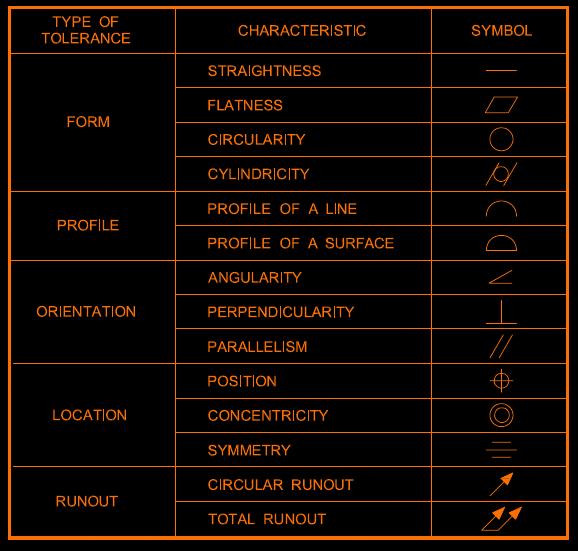
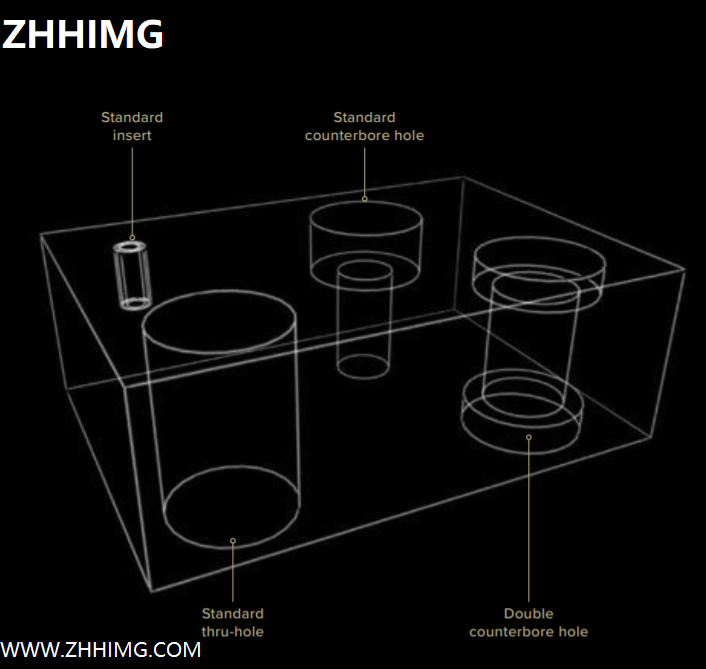
Kemm hemm tipi ta' toqob fuq granit ta' preċiżjoni?
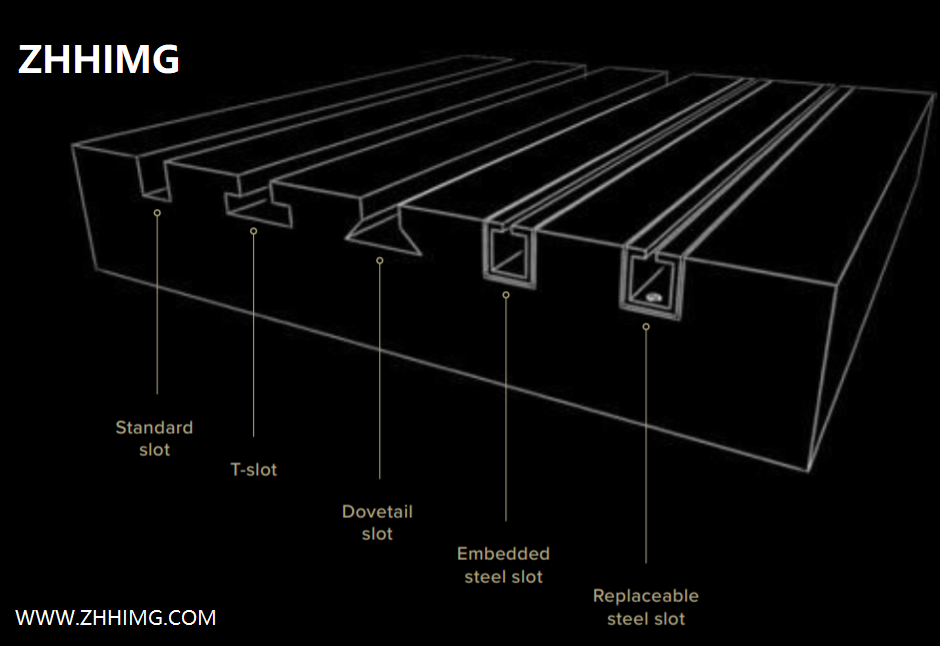
Slots fuq Komponenti tal-Granit ta' Preċiżjoni
Għal ħafna fabbriki, kmamar ta' spezzjoni u laboratorji, pjanċi tal-wiċċ tal-granit ta' preċiżjoni huma dipendenti fuqhom bħala l-bażi għal kejl preċiż. Minħabba li kull kejl lineari jiddependi fuq wiċċ ta' referenza preċiż li minnu jittieħdu d-dimensjonijiet finali, il-pjanċi tal-wiċċ jipprovdu l-aħjar pjan ta' referenza għall-ispezzjoni tax-xogħol u t-tqassim qabel il-magni. Huma wkoll bażijiet ideali biex isiru kejl tal-għoli u kejl tal-uċuħ. Barra minn hekk, grad għoli ta' ċatt, stabbiltà, kwalità ġenerali u abbilità jagħmluhom għażla tajba għall-immuntar ta' sistemi sofistikati ta' kejl mekkaniku, elettroniku u ottiku. Għal kwalunkwe minn dawn il-proċessi ta' kejl, huwa imperattiv li l-pjanċi tal-wiċċ jinżammu kalibrati.
Kejl Irrepeti u Ċatt
Kemm il-pjanità kif ukoll il-kejl ripetut huma kritiċi biex jiżguraw wiċċ ta' preċiżjoni. Il-pjanità tista' titqies bħala l-punti kollha fuq il-wiċċ li jinsabu f'żewġ pjani paralleli, il-pjan bażi u l-pjan tas-saqaf. Il-kejl tad-distanza bejn il-pjani huwa l-pjanità ġenerali tal-wiċċ. Dan il-kejl tal-pjanità ġeneralment iġorr tolleranza u jista' jinkludi denominazzjoni ta' grad.
It-tolleranzi tal-flatness għal tliet gradi standard huma definiti fl-ispeċifikazzjoni federali kif determinat mill-formula li ġejja:
Standard DIN, Standard GB, Standard ASME, standard JJS... pajjiż differenti bi stand differenti...
Aktar dettalji dwar l-istandard.
Minbarra l-flatness, trid tiġi żgurata r-ripetibbiltà. Kejl ripetut huwa kejl ta' żoni lokali ta' flatness. Huwa kejl meħud kullimkien fuq il-wiċċ ta' pjanċa li se jirrepeti ruħu fit-tolleranza ddikjarata. Il-kontroll tal-flatness taż-żona lokali għal tolleranza aktar stretta mill-flatness ġenerali jiggarantixxi bidla gradwali fil-profil tal-flatness tal-wiċċ, u b'hekk jimminimizza l-iżbalji lokali.
Biex jiġi żgurat li pjanċa tal-wiċċ tissodisfa kemm l-ispeċifikazzjonijiet tal-flatness kif ukoll dawk tal-kejl ripetut, il-manifatturi tal-pjanċi tal-wiċċ tal-granit għandhom jużaw l-Ispeċifikazzjoni Federali GGG-P-463c bħala bażi għall-ispeċifikazzjonijiet tagħhom. Dan l-istandard jindirizza l-eżattezza tal-kejl ripetut, il-proprjetajiet tal-materjal tal-granit tal-pjanċa tal-wiċċ, il-finitura tal-wiċċ, il-post tal-punt ta' appoġġ, l-ebusija, metodi aċċettabbli ta' spezzjoni u installazzjoni ta' inserzjonijiet bil-kamin.
Iċċekkjar tal-Preċiżjoni tal-Pjanċa
Billi ssegwi ftit linji gwida sempliċi, investiment fi pjanċa tal-wiċċ tal-granit għandu jdum għal ħafna snin. Skont l-użu tal-pjanċa, l-ambjent tal-ħanut tax-xogħol u l-eżattezza meħtieġa, il-frekwenza tal-iċċekkjar tal-eżattezza tal-pjanċa tal-wiċċ tvarja. Regola ġenerali hija li pjanċa ġdida tirċievi kalibrazzjoni mill-ġdid sħiħa fi żmien sena mix-xiri. Jekk il-pjanċa tintuża ta' spiss, huwa rakkomandabbli li dan l-intervall jitqassar għal sitt xhur.
Qabel ma pjanċa tal-wiċċ tkun intlibset lil hinn mill-ispeċifikazzjoni għall-flatness ġenerali, din se turi postijiet milbusa jew immewġin. Spezzjoni ta' kull xahar għal żbalji fil-kejl ripetut bl-użu ta' gauge tal-qari ripetut se tidentifika tikek tal-użu. Gauge tal-qari ripetut huwa strument ta' preċiżjoni għolja li jiskopri żball lokali u jista' jintwera fuq amplifikatur elettroniku b'ingrandiment għoli.
Programm ta' spezzjoni effettiv għandu jinkludi kontrolli regolari b'awtokollimatur, li jipprovdi kalibrazzjoni attwali tal-flatness ġenerali traċċabbli għall-Istitut Nazzjonali tal-Istandards u t-Teknoloġija (NIST). Kalibrazzjoni komprensiva mill-manifattur jew minn kumpanija indipendenti hija meħtieġa minn żmien għal żmien.
Varjazzjonijiet Bejn il-Kalibrazzjonijiet
F'xi każijiet, ikun hemm varjazzjonijiet bejn il-kalibrazzjonijiet tal-pjanċi tal-wiċċ. Kultant fatturi bħal bidla fil-wiċċ li tirriżulta minn xedd u kedd, użu mhux korrett ta' tagħmir ta' spezzjoni jew użu ta' tagħmir mhux kalibrat jistgħu jispjegaw dawn il-varjazzjonijiet. Madankollu, iż-żewġ fatturi l-aktar komuni huma t-temperatura u l-appoġġ.
Waħda mill-aktar varjabbli importanti hija t-temperatura. Pereżempju, il-wiċċ seta' nħasel b'soluzzjoni sħuna jew kiesħa qabel il-kalibrazzjoni u ma ngħatax biżżejjed ħin biex jiġi normalizzat. Kawżi oħra ta' bidla fit-temperatura jinkludu kurrenti ta' arja kiesħa jew sħuna, dawl tax-xemx dirett, dawl minn fuq jew sorsi oħra ta' sħana radjanti fuq il-wiċċ tal-pjanċa.
Jista' jkun hemm ukoll varjazzjonijiet fil-gradjent tat-temperatura vertikali bejn ix-xitwa u s-sajf. F'xi każijiet, il-pjanċa ma titħalliex biżżejjed ħin biex tinnormalizza wara l-ġarr. Hija idea tajba li tirreġistra t-temperatura tal-gradjent vertikali fil-ħin li titwettaq il-kalibrazzjoni.
Kawża komuni oħra għall-varjazzjoni fil-kalibrazzjoni hija pjanċa li mhix appoġġjata sew. Pjanċa tal-wiċċ għandha tkun appoġġjata fi tliet punti, idealment imqiegħda 20% tat-tul 'il ġewwa mit-truf tal-pjanċa. Żewġ appoġġi għandhom ikunu mqiegħda 20% tal-wisa' 'l ġewwa mill-ġnub twal, u l-appoġġ li jifdal għandu jkun iċċentrat.
Tliet punti biss jistgħu jistrieħu b'mod solidu fuq xi ħaġa ħlief wiċċ ta' preċiżjoni. Jekk tipprova ssostni l-pjanċa f'aktar minn tliet punti, il-pjanċa tirċievi l-appoġġ tagħha minn diversi kombinazzjonijiet ta' tliet punti, li mhux se jkunu l-istess tliet punti li fuqhom kienet appoġġjata waqt il-produzzjoni. Dan se jintroduċi żbalji hekk kif il-pjanċa titgħawweġ biex tikkonforma mal-arranġament il-ġdid tal-appoġġ. Ikkunsidra li tuża stands tal-azzar b'travi ta' appoġġ iddisinjati biex jallinjaw mal-punti ta' appoġġ xierqa. Stands għal dan il-għan ġeneralment huma disponibbli mingħand il-manifattur tal-pjanċa tal-wiċċ.
Jekk il-pjanċa tkun appoġġjata kif suppost, livellar preċiż huwa meħtieġ biss jekk applikazzjoni tispeċifika dan. Il-livellar mhux neċessarju biex tinżamm l-eżattezza ta' pjanċa appoġġjata kif suppost.
Estendi l-Ħajja tal-Pjanċa
Jekk issegwi ftit linji gwida, tnaqqas il-kedd fuq pjanċa tal-wiċċ tal-granit u fl-aħħar mill-aħħar, testendi l-ħajja tagħha.
L-ewwel, huwa importanti li l-pjanċa tinżamm nadifa. It-trab li jobrox fl-arja ġeneralment ikun l-akbar sors ta' xedd u kedd fuq pjanċa, peress li għandu t-tendenza li jidħol fil-biċċiet tax-xogħol u fl-uċuħ ta' kuntatt tal-gauges.
Huwa importanti wkoll li tgħatti l-pjanċi biex tipproteġihom mit-trab u l-ħsara. Il-ħajja tal-użu tista' tiġi estiża billi tgħatti l-pjanċa meta ma tkunx qed tintuża.
Dawwar il-pjanċa perjodikament sabiex żona waħda ma tirċevix użu eċċessiv. Barra minn hekk, huwa rakkomandat li l-pads tal-kuntatt tal-azzar fuq il-kejl jiġu sostitwiti b'pads tal-karbur.
Evita li tpoġġi ikel jew soft drinks fuq il-platt. Ħafna soft drinks fihom jew aċidu karboniku jew fosforiku, li jista’ jxolji l-minerali aktar rotob u jħalli ħofor żgħar fil-wiċċ.
Fejn tirrepeti
Meta pjanċa tal-wiċċ tal-granit teħtieġ wiċċ ġdid, ikkunsidra jekk dan is-servizz għandux isir fuq il-post jew fil-faċilità tal-kalibrazzjoni. Dejjem huwa preferibbli li l-pjanċa terġa' tiġi rfinuta fil-fabbrika jew f'faċilità ddedikata. Madankollu, jekk il-pjanċa ma tkunx milbusa wisq, ġeneralment fi żmien 0.001 pulzier mit-tolleranza meħtieġa, tista' tiġi rfinuta fuq il-post. Jekk pjanċa tkun milbusa sal-punt fejn tkun aktar minn 0.001 pulzier barra mit-tolleranza, jew jekk tkun imħaffra jew imqattgħa sew, allura għandha tintbagħat lill-fabbrika għat-tħin qabel ma terġa' tiġi rfinuta.
Faċilità ta' kalibrazzjoni għandha t-tagħmir u s-settings tal-fabbrika li jipprovdu l-aħjar kundizzjonijiet għal kalibrazzjoni xierqa tal-pjanċa u xogħol mill-ġdid jekk ikun meħtieġ.
Għandha tingħata attenzjoni kbira fl-għażla ta' tekniku tal-kalibrazzjoni u l-irfinar mill-ġdid fuq il-post. Itlob akkreditazzjoni u vverifika li t-tagħmir li se juża t-tekniku għandu kalibrazzjoni traċċabbli. L-esperjenza hija wkoll fattur importanti, peress li tieħu ħafna snin biex titgħallem kif tirrombla l-granit ta' preċiżjoni b'mod korrett.
Kejl kritiku jibda b'wiċċ tal-granit ta' preċiżjoni bħala linja bażi. Billi jiżguraw referenza affidabbli bl-użu ta' wiċċ ikkalibrat kif suppost, il-manifatturi jkollhom waħda mill-għodod essenzjali għal kejl affidabbli u partijiet ta' kwalità aħjar.Q
Lista ta' Kontroll għall-Varjazzjonijiet tal-Kalibrazzjoni
1. Il-wiċċ inħasel b'soluzzjoni sħuna jew kiesħa qabel il-kalibrazzjoni u ma ngħatax biżżejjed ħin biex jiġi normalizzat.
2. Il-pjanċa mhix appoġġjata kif suppost.
3. Bidla fit-temperatura.
4. Abbozzi.
5. Dawl tax-xemx dirett jew sħana radjanti oħra fuq il-wiċċ tal-pjanċa. Kun żgur li d-dawl minn fuq ma jkunx qed isaħħan il-wiċċ.
6. Varjazzjonijiet fil-gradjent tat-temperatura vertikali bejn ix-xitwa u s-sajf. Jekk possibbli, kun af it-temperatura tal-gradjent vertikali fil-ħin li titwettaq il-kalibrazzjoni.
7. Il-pjanċa ma ngħatatx biżżejjed ħin biex tiġi normalizzata wara l-ġarr.
8. Użu mhux xieraq ta' tagħmir ta' spezzjoni jew użu ta' tagħmir mhux kalibrat.
9. Bidla fil-wiċċ li tirriżulta mill-użu.
Pariri Teknoloġiċi
- Minħabba li kull kejl lineari jiddependi fuq wiċċ ta' referenza preċiż li minnu jittieħdu d-dimensjonijiet finali, il-pjanċi tal-wiċċ jipprovdu l-aħjar pjan ta' referenza għall-ispezzjoni tax-xogħol u t-tqassim qabel il-magni.
- Il-kontroll tal-planarità taż-żona lokali għal tolleranza aktar stretta mill-planarità ġenerali jiggarantixxi bidla gradwali fil-profil tal-planarità tal-wiċċ, u b'hekk jimminimizza l-iżbalji lokali.
- Programm ta' spezzjoni effettiv għandu jinkludi kontrolli regolari b'awtokollimatur, li jipprovdi kalibrazzjoni attwali tal-pjanura ġenerali traċċabbli għall-Awtorità Nazzjonali tal-Ispezzjoni.
Fost il-partiċelli minerali li jiffurmaw il-granit, aktar minn 90% huma feldspar u kwarz, li minnhom il-feldspar huwa l-aktar. Il-feldspar ħafna drabi jkun abjad, griż, u aħmar ċar, u l-kwarz ikun l-aktar bla kulur jew abjad griż, li jikkostitwixxu l-kulur bażiku tal-granit. Il-feldspar u l-kwarz huma minerali iebsin, u huwa diffiċli li jiċċaqalqu b'sikkina tal-azzar. Fir-rigward tat-tikek skuri fil-granit, prinċipalment majka sewda, hemm xi minerali oħra. Għalkemm il-bijotita hija relattivament ratba, il-kapaċità tagħha li tirreżisti l-istress mhijiex dgħajfa, u fl-istess ħin għandhom ammont żgħir fil-granit, ħafna drabi inqas minn 10%. Din hija l-kundizzjoni materjali li fiha l-granit huwa partikolarment b'saħħtu.
Raġuni oħra għaliex il-granit huwa b'saħħtu hija li l-partiċelli minerali tiegħu huma marbuta sew ma' xulxin u huma mdaħħla f'xulxin. Il-pori spiss jammontaw għal inqas minn 1% tal-volum totali tal-blat. Dan jagħti lill-granit il-ħila li jiflaħ pressjonijiet qawwija u ma jiġix ippenetrat faċilment mill-umdità.
Il-komponenti tal-granit huma magħmula minn ġebel mingħajr reżistenza għas-sadid, l-aċidu u l-alkali, reżistenza tajba għall-użu u ħajja twila ta' servizz, mingħajr manutenzjoni speċjali. Il-komponenti ta' preċiżjoni tal-granit jintużaw l-aktar fl-għodda tal-industrija tal-makkinarju. Għalhekk, jissejħu komponenti ta' preċiżjoni tal-granit jew komponenti tal-granit. Il-karatteristiċi tal-komponenti ta' preċiżjoni tal-granit huma bażikament l-istess bħal dawk tal-pjattaformi tal-granit. Introduzzjoni għall-għodda u l-kejl tal-komponenti ta' preċiżjoni tal-granit: Il-magni ta' preċiżjoni u t-teknoloġija tal-mikromagni huma direzzjonijiet ta' żvilupp importanti tal-industrija tal-manifattura tal-makkinarju, u saru indikatur importanti biex jitkejjel livell ta' teknoloġija għolja. L-iżvilupp ta' teknoloġija avvanzata u l-industrija tad-difiża huwa inseparabbli mill-magni ta' preċiżjoni u t-teknoloġija tal-mikromagni. Il-komponenti tal-granit jistgħu jiżżerżqu bla xkiel fil-kejl, mingħajr staġnar. Kejl tal-wiċċ tax-xogħol, grif ġenerali ma jaffettwax l-eżattezza tal-kejl. Il-komponenti tal-granit jeħtieġ li jiġu ddisinjati u prodotti skont ir-rekwiżiti tan-naħa tad-domanda.
Qasam tal-applikazzjoni:
Kif nafu lkoll, aktar u aktar magni u tagħmir qed jagħżlu komponenti tal-granit ta' preċiżjoni.
Komponenti tal-granit jintużaw għal moviment dinamiku, muturi lineari, cmm, cnc, magna tal-lejżer...
merħba tikkuntattjana għal aktar informazzjoni.
L-apparati tal-kejl tal-granit u l-komponenti mekkaniċi tal-granit huma magħmula minn granit Iswed Jinan ta’ kwalità għolja. Minħabba l-preċiżjoni għolja, id-durata twila, l-istabbiltà tajba u r-reżistenza għall-korrużjoni tagħhom, qed jintużaw dejjem aktar fl-ispezzjoni tal-prodotti tal-industrija moderna u f’oqsma xjentifiċi bħall-ispazju aerospazjali mekkaniku u r-riċerka xjentifika.
Vantaġġi
---- Darbtejn aktar iebes mill-ħadid fondut;
---- Bidliet minimi fid-dimensjoni huma dovuti għal bidliet fit-temperatura;
---- Ħieles mit-tgħasir, għalhekk ma jkunx hemm interruzzjoni tax-xogħol;
---- Ħieles minn burrs jew protrużjonijiet minħabba l-istruttura tal-qamħ fin u l-kolliċità insinifikanti, li tiżgura l-grad għoli ta' ċatt fuq ħajja twila ta' servizz u ma tikkawża l-ebda ħsara lil partijiet jew strumenti oħra;
----Tħaddim mingħajr problemi għall-użu ma' materjali manjetiċi;
---- Ħajja twila u ħielsa mis-sadid, li tirriżulta fi spejjeż baxxi ta' manutenzjoni.
Il-pjanċi tal-wiċċ tal-granit ta' preċiżjoni huma mdaħħla bi preċiżjoni għal standard għoli ta' ċattità biex tinkiseb preċiżjoni u jintużaw bħala bażi għall-immuntar ta' sistemi sofistikati ta' kejl mekkaniku, elettroniku u ottiku.
Xi wħud mill-karatteristiċi uniċi tal-pjanċa tal-wiċċ tal-granit:
Uniformità fl-Ebusija;
Preċiż taħt Kundizzjonijiet ta' tagħbija;
Assorbenti tal-Vibrazzjoni;
Faċli biex Tnaddaf;
Reżistenti għall-Wrap;
Porożità Baxxa;
Mhux abrażiv;
Mhux Manjetiku
Vantaġġi tal-Pjanċa tal-Wiċċ tal-Granit
L-ewwel, il-blat wara perjodu twil ta' tixjiħ naturali, struttura uniformi, koeffiċjent minimu, l-istress intern jisparixxi kompletament, mhux deformat, għalhekk il-preċiżjoni hija għolja.
It-tieni, ma jkun hemm l-ebda grif, mhux taħt kundizzjonijiet ta' temperatura kostanti, f'temperatura tal-kamra tista' wkoll iżżomm l-eżattezza tal-kejl tat-temperatura.
It-tielet, mhux magnetizzazzjoni, il-kejl jista' jkun moviment bla xkiel, l-ebda sensazzjoni ta' tqaxxir, mhux affettwat mill-umdità, il-pjan huwa fiss.
Erbgħa, ir-riġidità hija tajba, l-ebusija hija għolja, ir-reżistenza għall-brix hija qawwija.
Ħamsa, ma jibżgħux mill-aċidu, l-erożjoni tal-likwidu alkalin, mhux se jissaddad, m'għandhomx għalfejn jiżbgħu ż-żejt, mhux faċli li jwaħħal mikro-trab, manutenzjoni, faċli biex tinżamm, ħajja twila ta' servizz.
Għaliex tagħżel bażi tal-granit minflok sodda tal-magna tal-ħadid fondut?
1. Il-bażi tal-magna tal-granit tista' żżomm preċiżjoni ogħla mill-bażi tal-magna tal-ħadid fondut. Il-bażi tal-magna tal-ħadid fondut hija faċilment affettwata mit-temperatura u l-umdità iżda l-bażi tal-magna tal-granit le;
2. Bl-istess daqs tal-bażi tal-magna tal-granit u l-bażi tal-ħadid fondut, il-bażi tal-magna tal-granit hija aktar kosteffettiva mill-ħadid fondut;
3. Il-bażi speċjali tal-magna tal-granit hija aktar faċli biex tiġi lesta mill-bażi tal-magna tal-ħadid fondut.
Il-pjanċi tal-wiċċ tal-granit huma strumenti ewlenin fil-laboratorji ta' spezzjoni madwar il-pajjiż. Il-wiċċ ikkalibrat u estremament ċatt ta' pjanċa tal-wiċċ jippermetti lill-ispetturi jużawhom bħala linja bażi għall-ispezzjonijiet tal-partijiet u l-kalibrazzjoni tal-istrumenti. Mingħajr l-istabbiltà li joffru l-pjanċi tal-wiċċ, ħafna mill-partijiet b'tolleranza stretta f'diversi oqsma teknoloġiċi u mediċi jkunu ħafna aktar diffiċli, jekk mhux impossibbli, biex jiġu manifatturati b'mod korrett. Naturalment, biex tuża blokka tal-wiċċ tal-granit biex tikkalibra u tispezzjona materjali u għodod oħra, l-eżattezza tal-granit innifsu trid tiġi vvalutata. L-utenti jistgħu jikkalibraw pjanċa tal-wiċċ tal-granit biex jiżguraw l-eżattezza tagħha.
Naddaf il-pjanċa tal-wiċċ tal-granit qabel il-kalibrazzjoni. Ferra ammont żgħir ta' prodott għat-tindif tal-pjanċa tal-wiċċ fuq drapp nadif u artab u imsaħ il-wiċċ tal-granit. Nixxef immedjatament il-prodott għat-tindif mill-pjanċa tal-wiċċ b'ċarruta niexfa. Tħallix il-likwidu tat-tindif jinxef bl-arja.
Poġġi gauge tal-kejl ripetut fiċ-ċentru tal-pjanċa tal-wiċċ tal-granit.
Żero l-gauge tal-kejl ripetut mal-wiċċ tal-pjanċa tal-granit.
Mexxi l-gauge bil-mod fuq il-wiċċ tal-granit. Ara l-indikatur tal-gauge u rreġistra l-qċaċet ta' kwalunkwe varjazzjoni fl-għoli hekk kif iċċaqlaq l-istrument fuq il-pjanċa.
Qabbel il-varjazzjoni tal-flatness tul il-wiċċ tal-pjanċa mat-tolleranzi għall-pjanċa tal-wiċċ tiegħek, li tvarja skont id-daqs tal-pjanċa u l-grad ta' flatness tal-granit. Ikkonsulta l-ispeċifikazzjoni federali GGG-P-463c (ara r-Riżorsi) biex tiddetermina jekk il-pjanċa tiegħek tissodisfax ir-rekwiżiti ta' flatness għad-daqs u l-grad tagħha. Il-varjazzjoni bejn l-ogħla punt fuq il-pjanċa u l-aktar punt baxx fuq il-pjanċa hija l-kejl tal-flatness tagħha.
Iċċekkja li l-akbar varjazzjonijiet fil-fond fuq il-wiċċ tal-pjanċa jaqgħu fl-ispeċifikazzjonijiet tar-ripetibbiltà għal pjanċa ta’ dak id-daqs u l-grad. Ikkonsulta l-ispeċifikazzjoni federali GGG-P-463c (ara r-Riżorsi) biex tiddetermina jekk il-pjanċa tiegħek tissodisfax ir-rekwiżiti tar-ripetibbiltà għad-daqs tagħha. Irrifjuta l-pjanċa tal-wiċċ jekk anke punt wieħed jonqos mir-rekwiżiti tar-ripetibbiltà.
Waqqaf l-użu ta' pjanċa tal-wiċċ tal-granit li ma tissodisfax ir-rekwiżiti federali. Irritorna l-pjanċa lill-manifattur jew lil kumpanija tal-wiċċ tal-granit biex il-blokka terġa' tiġi llustrata biex tissodisfa l-ispeċifikazzjonijiet.
Ponta
Agħmel kalibrazzjonijiet formali mill-inqas darba fis-sena, għalkemm il-pjanċi tal-wiċċ tal-granit li jintużaw ħafna għandhom jiġu kalibrati aktar ta' spiss.
Kalibrazzjoni formali u rrekordjabbli f'ambjenti ta' manifattura jew spezzjoni ħafna drabi titwettaq minn assigurazzjoni tal-kwalità jew minn bejjiegħ estern ta' servizzi ta' kalibrazzjoni, għalkemm kulħadd jista' juża gauge tal-kejl ripetut biex jiċċekkja informalment pjanċa tal-wiċċ qabel l-użu.
L-Istorja Bikrija tal-Pjanċi tal-Wiċċ tal-Granit
Qabel it-Tieni Gwerra Dinjija, il-Manifatturi użaw Pjanċi tal-Wiċċ tal-Azzar għall-ispezzjoni dimensjonali tal-partijiet. Matul it-Tieni Gwerra Dinjija l-ħtieġa għall-azzar żdiedet drastikament, u ħafna Pjanċi tal-Wiċċ tal-Azzar ġew imdewba. Kien hemm bżonn ta’ sostituzzjoni, u l-Granit sar il-materjal magħżul minħabba l-proprjetajiet metroloġiċi superjuri tiegħu.
Diversi vantaġġi tal-granit fuq l-azzar saru evidenti. Il-granit huwa aktar iebes, għalkemm aktar fraġli u soġġett għat-tqattigħ. Tista' tirroppa l-granit għal ċatt ħafna akbar u aktar malajr mill-azzar. Il-granit għandu wkoll il-proprjetà mixtieqa ta' espansjoni termali aktar baxxa meta mqabbel mal-azzar. Barra minn hekk, jekk pjanċa tal-azzar kellha bżonn tiswija, kellha tiġi mibruxa bl-idejn minn artiġjani li applikaw ukoll il-ħiliet tagħhom fir-rikostruzzjoni tal-għodod tal-magni.
Bħala nota sekondarja, xi Pjanċi tal-Wiċċ tal-Azzar għadhom jintużaw illum.
Proprjetajiet Metroloġiċi tal-Pjanċi tal-Granit
Il-granit huwa blata igneja ffurmata minn eruzzjonijiet vulkaniċi. B'paragun, l-irħam huwa ġebla tal-ġir metamorfizzata. Għall-użu fil-metroloġija, il-granit magħżul għandu jissodisfa r-rekwiżiti speċifiċi deskritti fl-Ispeċifikazzjoni Federali GGG-P-463c, minn issa 'l quddiem imsejħa Fed Specs, u speċifikament, il-Parti 3.1 3.1 Fost l-Fed Specs, il-granit għandu jkollu tessut ta' grana fina sa medja.
Il-granit huwa materjal iebes, iżda l-ebusija tiegħu tvarja għal diversi raġunijiet. Tekniku tal-pjanċi tal-granit b'esperjenza jista' jistma l-ebusija mill-kulur tiegħu li huwa indikazzjoni tal-kontenut tal-kwarz tiegħu. L-ebusija tal-granit hija proprjetà definita parzjalment mill-ammont ta' kontenut tal-kwarz u n-nuqqas ta' majka. Il-graniti ħomor u roża għandhom it-tendenza li jkunu l-aktar iebsa, il-griżi huma ta' ebusija medja, u l-iswed huma l-aktar rotob.
Il-Modulu tal-Elastiċità ta' Young jintuża biex jesprimi l-flessibbiltà jew l-indikazzjoni tal-ebusija tal-ġebla. Il-granit roża għandu medja ta' 3-5 punti fuq l-iskala, il-griż 5-7 punti u l-iswed 7-10 punti. Iktar ma jkun żgħir in-numru, iktar ikun iebes il-granit. Iktar ma jkun kbir in-numru, iktar ikun artab u flessibbli l-granit. Huwa importanti li tkun taf l-ebusija tal-Granit meta tagħżel ħxuna meħtieġa għall-gradi ta' tolleranza u l-piż tal-partijiet u l-kejlijiet imqiegħda fuqu.
Fi żmien il-qedem meta kien hemm makkinisti veri, magħrufa mill-ktejjeb tat-tabelli trigonometriċi tagħhom fil-bwiet tal-qmis tagħhom, il-granit iswed kien meqjus bħala "L-Aħjar". L-Aħjar definit bħala t-tip li jagħti l-aktar reżistenza għall-użu jew li huwa aktar iebes. Żvantaġġ wieħed huwa li l-graniti aktar iebsin għandhom it-tendenza li jitfarrku jew jitħaffru aktar faċilment. Il-makkinisti kienu tant konvinti li l-granit iswed kien l-aħjar li xi manifatturi tal-granit roża żebgħuhom bl-iswed.
Jiena personalment rajt pjanċa li twaqqgħet minn fuq forklift meta tneħħiet mill-maħżen. Il-pjanċa laqtet l-art u nqasmet fi tnejn u kixfet il-kulur roża veru tagħha. Oqgħod attent jekk qed tippjana li tixtri granit iswed miċ-Ċina. Nirrakkomandaw li taħli flusek b'xi mod ieħor. Pjanċa tal-granit tista' tvarja fl-ebusija fiha nnifisha. Strixxa ta' kwarz tista' tkun ħafna aktar iebsa mill-bqija tal-pjanċa tal-wiċċ. Saff ta' gabbro iswed jista' jagħmel żona ħafna aktar ratba. Tekniku tat-tiswija tal-pjanċi tal-wiċċ imħarreġ sew u b'esperjenza jaf kif jimmaniġġja dawn iż-żoni rotob.
Gradi tal-Pjanċa tal-Wiċċ
Hemm erba' gradi ta' pjanċi tal-wiċċ. Grad AA u A tal-laboratorju, Grad B tal-Ispezzjoni tal-Kamra, u r-raba' huwa Grad tal-Workshop. Il-Gradi AA u A huma l-aktar ċatti b'tolleranzi ta' ċattità aħjar minn 0.00001 pulzier għal pjanċa tal-Grad AA. Il-Gradi tal-Workshop huma l-inqas ċatti u kif jissuġġerixxi l-isem, huma maħsuba għall-użu fil-kmamar tal-għodda. Filwaqt li l-Gradi AA, il-Gradi A u l-Grad B huma maħsuba għall-użu f'laboratorju ta' spezzjoni jew kontroll tal-kwalità.
PIttestjar tal-korda għall-kalibrazzjoni tal-pjanċa tal-wiċċ
Dejjem għedt lill-klijenti tiegħi li nista' noħroġ kwalunkwe tifel ta' 10 snin mill-knisja tiegħi u ngħallmu fi ftit jiem biss kif jittestja pjanċa. Mhuwiex diffiċli. Jeħtieġ xi teknika biex twettaq il-kompitu malajr, tekniki li wieħed jitgħallem biż-żmien u b'ħafna ripetizzjoni. Għandi ninfurmakom, u ma nistax nenfasizza biżżejjed, li Fed Spec GGG-P-463c MHUX proċedura ta' kalibrazzjoni! Aktar dwar dan aktar tard.
Il-kalibrazzjoni tal-flatness ġenerali (Mean Pane) u l-kontrolli tar-Ripetibbiltà (użu lokalizzat) hija essenzjali Skont l-Ispeċifikazzjonijiet tal-Fed. L-unika eċċezzjoni għal dan hija fil-każ ta' pjanċi żgħar fejn hija meħtieġa biss ir-ripetibbiltà.
Ukoll, u daqstant kritiku daqs it-testijiet l-oħra, huwa t-test għall-gradjenti termali. (Ara Delta T hawn taħt)
Figura 1
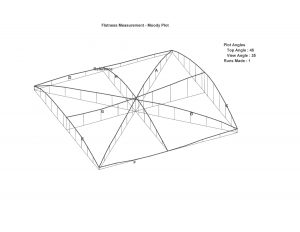
L-Ittestjar tal-Planity għandu 4 metodi approvati. Livelli elettroniċi, awtokollimazzjoni, laser u apparat magħruf bħala plan locator. Aħna nużaw livelli elettroniċi biss għax huma l-aktar metodu preċiż u veloċi għal diversi raġunijiet.
Il-lejżers u l-awtokollimaturi jużaw raġġ ta' dawl dritt ħafna bħala referenza. Wieħed jagħmel kejl tad-drittezza ta' pjanċa tal-wiċċ tal-granit billi jqabbel il-varjazzjoni fid-distanza bejn il-pjanċa tal-wiċċ u r-raġġ tad-dawl. Billi tieħu raġġ ta' dawl dritt, tolqot mira riflettur waqt li ċċaqlaq il-mira riflettur 'l isfel mal-pjanċa tal-wiċċ, id-distanza bejn ir-raġġ emess u r-raġġ tar-ritorn hija kejl tad-drittezza.
Hawn hi l-problema b'dan il-metodu. Il-mira u s-sors huma affettwati mill-vibrazzjoni, it-temperatura ambjentali, mira mhux ċatta jew imxarrba, kontaminazzjoni fl-arja, u moviment tal-arja (kurrenti). Dawn kollha jikkontribwixxu komponenti addizzjonali ta' żball. Barra minn hekk, il-kontribuzzjoni tal-iżball tal-operatur minn kontrolli b'awtokollimatur hija akbar.
Utent ta' awtokollimatur b'esperjenza jista' jagħmel kejl preċiż ħafna iżda xorta jiffaċċja problemi bil-konsistenza tal-qari speċjalment fuq distanzi itwal peress li r-riflessjonijiet għandhom it-tendenza li jitwessgħu jew isiru xi ftit imċajpra. Barra minn hekk, mira mhux perfettament ċatta u ġurnata twila ta' ħarsa minn ġol-lenti jipproduċu żbalji addizzjonali.
Apparat li jillokalizza l-pjan huwa sempliċiment iblah. Dan l-apparat juża raġġ tad-dawl kemxejn dritt (meta mqabbel ma' raġġ tad-dawl kollimat jew bil-lejżer estremament dritt) bħala r-referenza tiegħu. Mhux biss l-apparat mekkaniku juża indikatur li normalment ikollu riżoluzzjoni ta' 20 pulzier biss, iżda n-nuqqas ta' drittezza tal-bar u l-materjali differenti jżidu b'mod sinifikanti l-iżbalji fil-kejl. Fl-opinjoni tagħna, għalkemm il-metodu huwa aċċettabbli, l-ebda laboratorju kompetenti qatt ma juża apparat li jillokalizza l-pjan bħala strument ta' spezzjoni finali.
Il-livelli elettroniċi jużaw il-gravità bħala r-referenza tagħhom. Il-livelli elettroniċi differenzjali mhumiex affettwati mill-vibrazzjoni. Għandhom riżoluzzjoni baxxa daqs .1 sekonda ta' ark u l-kejl huwa veloċi, preċiż u ftit li xejn hemm kontribuzzjoni ta' żball minn operatur b'esperjenza. La l-Lokaturi tal-Pjan u lanqas l-awtokollimaturi ma jipprovdux plots topografiċi (Figura 1) jew isometriċi (Figura 2) iġġenerati mill-kompjuter tal-wiċċ.
Figura 2
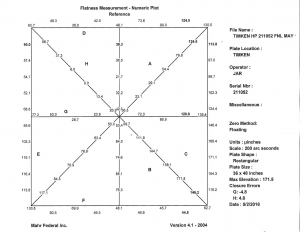
Test ta' Ċattità Xierqa tal-Wiċċ
Test tal-pjanura xierqa tal-wiċċ huwa parti tant importanti ta' dan id-dokument li messni poġġejtu fil-bidu. Kif intqal qabel, l-Ispeċifikazzjoni Fed. GGG-p-463c MHIX metodu ta' kalibrazzjoni. Din isservi bħala gwida għal ħafna aspetti tal-granit ta' grad metroloġiċi li x-xerrej maħsub tagħhom huwa kwalunkwe Aġenzija tal-Gvern Federali, u dan jinkludi l-metodi ta' ttestjar u t-tolleranzi jew il-gradi. Jekk kuntrattur jiddikjara li żamm mal-Ispeċifikazzjonijiet Fed, allura l-valur tal-pjanura għandu jiġi determinat bil-Metodu Moody.
Moody kien raġel li oriġina fis-snin 50 li fassal metodu matematiku biex jiddetermina l-pjanura ġenerali u jqis l-orjentazzjoni tal-linji ttestjati, jekk kinux qrib biżżejjed fl-istess pjan. Xejn ma nbidel. Allied Signal ippruvaw itejbu l-metodu matematiku iżda kkonkludew li d-differenzi kienu tant żgħar li ma kienx jiswa l-isforz.
Jekk kuntrattur tal-pjanċi tal-wiċċ juża Livelli Elettroniċi jew lejżer, juża kompjuter biex jgħin fil-kalkoli. Mingħajr l-għajnuna tal-kompjuter, it-tekniku li juża l-awtokollimazzjoni jrid jikkalkula l-qari bl-idejn. Fir-realtà, ma jagħmlux dan. Jieħu wisq żmien u franchement jista' jkun wisq ta' sfida. F'test ta' ċattità bl-użu tal-Metodu Moody, it-tekniku jittestja tmien linji f'konfigurazzjoni ta' Union Jack għad-drittezza.
Il-Metodu Moody
Il-Metodu Moody huwa mod matematiku biex tiddetermina jekk it-tmien linji humiex fuq l-istess pjan. Inkella, ikollok biss 8 linji dritti li jistgħu jew ma jistgħux ikunu fuq jew qrib l-istess pjan. Barra minn hekk, kuntrattur li jiddikjara li jaderixxi mal-Ispeċifikazzjonijiet Fed, u juża l-awtokollimazzjoni, huiridjiġġenera tmien paġni ta’ dejta. Paġna waħda għal kull linja ċċekkjata biex tipprova t-testijiet, it-tiswija, jew it-tnejn li huma tiegħu. Inkella, il-kuntrattur ma jkollu l-ebda idea x'inhu l-valur reali tal-flatness.
Jiena ċert li jekk int wieħed minn dawk li jikkalibraw il-pjanċi tiegħek minn kuntrattur bl-użu tal-awtokollimazzjoni, qatt ma rajt dawk il-paġni! Il-Figura 3 hija kampjun ta'wieħed bissPaġna ta' tmienja meħtieġa biex tikkalkula l-pjanura ġenerali. Indikazzjoni waħda ta' dik l-injoranza u l-malizzja hija jekk ir-rapport tiegħek ikollu numri tondi sbieħ. Pereżempju, 200, 400, 650, eċċ. Valur ikkalkulat sew huwa numru reali. Pereżempju 325.4 u In. Meta l-kuntrattur juża l-Metodu Moody tal-kalkoli, u t-tekniku jikkalkula l-valuri manwalment, għandek tirċievi tmien paġni ta' kalkoli u plott isometriku. Il-plott isometriku juri l-għoli varjabbli tul il-linji differenti u kemm hemm distanza li tifred il-punti ta' intersezzjoni magħżula.
Figura 3(Jieħu tmien paġni bħal din biex tikkalkula l-flatness manwalment. Kun żgur li tistaqsi għaliex m'intix qed tirċievi dan jekk il-kuntrattur tiegħek juża l-awtokollimazzjoni!)
Figura 4
It-tekniċi tal-Gauge Dimensjonali jużaw livelli differenzjali (Figura 4) bħala apparati preferuti biex ikejlu l-bidliet żgħar fl-angolarità minn stazzjon tal-kejl għal stazzjon. Il-livelli għandhom riżoluzzjoni sa .1 sekondi ta' ark (5 u Pulzieri bl-użu ta' sled ta' 4″) huma estremament stabbli, mhumiex affettwati minn vibrazzjoni, distanzi mkejla, kurrenti tal-arja, għeja tal-operatur, kontaminazzjoni tal-arja jew kwalunkwe problema inerenti f'apparati oħra. Żid l-assistenza tal-kompjuter, u l-kompitu jsir relattivament veloċi, u jiġġenera plottijiet topografiċi u iżometriċi li jippruvaw il-verifika u l-aktar importanti t-tiswija.
Test ta' Ripetibbiltà Xierqa
Il-qari ripetut jew ir-ripetibbiltà huwa l-aktar test importanti. It-tagħmir li nużaw biex inwettqu t-test tar-ripetibbiltà huwa apparat tal-qari ripetut, LVDT u amplifikatur meħtieġ għal qari b'riżoluzzjoni għolja. Aħna nissettjaw l-amplifikatur LVDT għal riżoluzzjoni minima ta' 10 u Pulzieri jew 5 u Pulzieri għal pjanċi ta' preċiżjoni għolja.
L-użu ta' indikatur mekkaniku b'riżoluzzjoni ta' 20 u Pulzieri biss huwa bla valur jekk qed tipprova tittestja għal rekwiżit ta' ripetibbiltà ta' 35 u Pulzieri. L-indikaturi għandhom inċertezza ta' 40 u Pulzieri! Is-setup tal-qari ripetut jimita konfigurazzjoni ta' gauge/parti tal-għoli.
Ir-ripetibbiltà MHIX l-istess bħall-pjanità ġenerali (Pjan Medju). Nixtieq naħseb fir-ripetibbiltà fil-granit meqjusa bħala kejl konsistenti tar-raġġ.
Figura 5
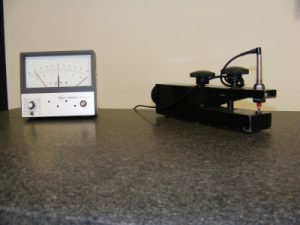
Jekk tittestja r-ripetibbiltà ta' ballun tond, allura tkun urejt li r-raġġ tal-ballun ma nbidilx. (Il-profil ideali ta' pjanċa msewwija kif suppost għandu forma konvessa u inkurunata.) Madankollu, huwa evidenti li l-ballun mhuwiex ċatt. Ukoll, xi ftit jew wisq. Fuq distanza qasira ħafna, huwa ċatt. Peress li l-maġġoranza tax-xogħol ta' spezzjoni jinvolvi gauge tal-għoli qrib ħafna tal-parti, ir-ripetibbiltà ssir l-aktar proprjetà kritika ta' pjanċa tal-granit. Huwa aktar importanti mill-pjanura ġenerali sakemm utent ma jkunx qed jiċċekkja d-drittar ta' parti twila.
Kun żgur li l-kuntrattur tiegħek iwettaq test tal-qari ripetut. Pjanċa jista' jkollha qari ripetut ferm barra mit-tolleranza iżda xorta tgħaddi minn test tal-ċatt! B'mod sorprendenti, laboratorju jista' jikseb akkreditazzjoni f'testijiet li ma jinkludux test tal-qari ripetut. Laboratorju li ma jistax isewwi jew mhux tajjeb ħafna fit-tiswija jippreferi jwettaq biss testijiet tal-ċatt. Il-ċatt rarament jinbidel sakemm ma ċċaqlaqx il-pjanċa.
It-testjar tal-qari ripetut huwa l-aktar faċli biex jiġi ttestjat iżda l-aktar diffiċli biex jinkiseb meta tkun qed titlappa. Kun ċert li l-kuntrattur tiegħek jista' jirrestawra r-ripetibbiltà mingħajr ma "jitħaffer" il-wiċċ jew iħalli mewġ fil-wiċċ.
Test Delta T
Dan it-test jinvolvi l-kejl tat-temperatura REALI tal-ġebla fil-wiċċ ta’ fuq tagħha u l-wiċċ ta’ isfel tagħha u l-kalkolu tad-differenza, Delta T, għar-rappurtar fuq iċ-ċertifikat.
Huwa importanti li tkun taf li l-koeffiċjent medju tal-espansjoni termali fil-granit huwa 3.5 uIn/Pulzier/grad. It-temperaturi ambjentali u l-effett tal-umdità fuq pjanċa tal-granit huma negliġibbli. Madankollu, pjanċa tal-wiċċ tista' toħroġ mit-tolleranza jew xi kultant titjieb anke jekk tkun f'Delta T ta' .3 – .5 gradi F. Huwa meħtieġ li tkun taf jekk id-Delta T hijiex fi ħdan .12 gradi F minn fejn id-differenzjali mill-aħħar kalibrazzjoni.
Huwa importanti wkoll li tkun taf li l-wiċċ tax-xogħol ta' pjanċa jemigra lejn is-sħana. Jekk it-temperatura ta' fuq tkun iktar sħuna minn dik ta' isfel, allura l-wiċċ ta' fuq jogħla. Jekk il-qiegħ ikun iktar sħun, li huwa rari, allura l-wiċċ ta' fuq jegħreq. Mhuwiex biżżejjed għal maniġer tal-kwalità jew tekniku li jkun jaf li l-pjanċa hija ċatta u ripetibbli fil-ħin tal-kalibrazzjoni jew it-tiswija iżda x'kienet id-Delta T tagħha fil-ħin tal-ittestjar tal-kalibrazzjoni finali. F'sitwazzjonijiet kritiċi, utent jista', billi jkejjel id-Delta T hu stess, jiddetermina jekk pjanċa marritx barra mit-tolleranza biss minħabba varjazzjonijiet fid-Delta T. Fortunatament, il-granit jieħu ħafna sigħat jew saħansitra jiem biex jakklima ruħu ma' ambjent. Varjazzjonijiet żgħar fit-temperatura ambjentali matul il-ġurnata mhux se jaffettwawha. Għal dawn ir-raġunijiet, ma nirrappurtawx it-temperatura jew l-umdità tal-kalibrazzjoni ambjentali għaliex l-effetti huma negliġibbli.
Ilbies tal-Pjanċa tal-Granit
Filwaqt li l-granit huwa aktar iebes mill-pjanċi tal-azzar, il-granit xorta jiżviluppa tikek baxxi fuq il-wiċċ. Il-moviment ripetittiv tal-partijiet u l-gages fuq il-pjanċa tal-wiċċ huwa l-akbar sors ta' xedd, speċjalment jekk l-istess żona tkun qed tintuża kontinwament. Il-ħmieġ u t-trab tat-tħin li jitħallew fuq il-wiċċ ta' pjanċa jħaffu l-proċess ta' xedd hekk kif jidħlu bejn il-partijiet jew il-gages u l-wiċċ tal-granit. Meta tiċċaqlaq partijiet u gages fuq il-wiċċ tagħha, it-trab li jobrox ġeneralment ikun il-kawża ta' xedd addizzjonali. Nirrakkomanda ħafna tindif kostanti biex jitnaqqas ix-xedd. Rajna xedd fuq il-pjanċi kkawżat minn kunsinni ta' pakketti UPS ta' kuljum imqiegħda fuq il-pjanċi! Dawk iż-żoni lokalizzati ta' xedd jaffettwaw il-qari tat-test tar-ripetibbiltà tal-kalibrazzjoni. Evita l-xedd billi tnaddaf regolarment.
Tindif tal-Pjanċi tal-Granit
Biex iżżomm il-pjanċa nadifa, uża drapp tat-tindif biex tneħħi t-trab. Agħfas ħafif ħafna, sabiex ma tħallix residwu tal-kolla. Drapp tat-tindif użat sew jagħmel xogħol eċċellenti biex jiġbor it-trab tat-tħin bejn it-tindif. Taħdimx fl-istess post. Mexxi s-setup tiegħek madwar il-pjanċa, billi tqassam l-użu. Huwa tajjeb li tuża l-alkoħol biex tnaddaf pjanċa, iżda kun konxju li jekk tagħmel dan se tkessaħ ħafna l-wiċċ temporanjament. L-ilma b'ammont żgħir ta' sapun huwa eċċellenti. Il-prodotti tat-tindif disponibbli kummerċjalment bħal Starrett's cleaner huma wkoll eċċellenti biex tużahom, iżda kun żgur li tneħħi r-residwu kollu tas-sapun mill-wiċċ.
Tiswija tal-Pjanċa tal-Granit
Issa għandu jkun evidenti l-importanza li tiżgura li l-kuntrattur tal-pjanċa tal-wiċċ tiegħek iwettaq kalibrazzjoni kompetenti. Il-laboratorji tat-tip "Clearing House" li joffru programmi "Agħmel kollox b'sejħa waħda" rarament ikollhom tekniku li jista' jagħmel tiswijiet. Anke jekk joffru tiswijiet, mhux dejjem ikollhom tekniku li għandu l-esperjenza meħtieġa meta l-pjanċa tal-wiċċ tkun barra mit-tolleranza b'mod sinifikanti.
Jekk jgħidulek li pjanċa ma tistax tissewwa minħabba użu estrem, ċemplilna. X'aktarx li nistgħu nagħmlu t-tiswija.
It-tekniċi tagħna jaħdmu apprendistat ta’ sena sa sena u nofs taħt Tekniku Prinċipali tal-Pjanċa tal-Wiċċ. Aħna niddefinixxu Tekniku Prinċipali tal-Pjanċa tal-Wiċċ bħala xi ħadd li temm l-apprendistat tiegħu u għandu aktar minn għaxar snin oħra esperjenza fil-kalibrazzjoni u t-Tiswija tal-Pjanċa tal-Wiċċ. F’Dimensional Gauge għandna tliet Tekniċi Prinċipali fl-istaff b’aktar minn 60 sena esperjenza flimkien. Wieħed mit-Tekniċi Prinċipali tagħna huwa disponibbli l-ħin kollu għal appoġġ u gwida meta jinqalgħu sitwazzjonijiet diffiċli. It-tekniċi kollha tagħna għandhom esperjenza fil-kalibrazzjonijiet tal-pjanċi tal-wiċċ ta’ kull daqs, minn żgħar għal kbar ħafna, kundizzjonijiet ambjentali varji, industriji differenti, u fi problemi kbar ta’ xedd.
L-Ispeċifikazzjonijiet tal-Fed għandhom rekwiżit speċifiku ta' finitura ta' 16 sa 64 Ħruxija Aritmetika Medja (AA). Aħna nippreferu finitura fil-medda ta' 30-35 AA. Hemm biżżejjed ħruxija biex tiżgura li l-partijiet u l-gages jiċċaqalqu bla xkiel u ma jeħlux jew jitgħawġux mal-pjanċa tal-wiċċ.
Meta nsewwu, nispezzjonaw il-pjanċa għal immuntar u livellar xieraq. Nużaw metodu ta' lapping niexef, iżda f'każijiet ta' xedd estrem li jeħtieġ tneħħija sostanzjali tal-granit, nużaw lapping imxarrab. It-tekniċi tagħna jnaddfu warajhom, huma bir-reqqa, veloċi u preċiżi. Dan huwa importanti għaliex l-ispiża tas-servizz tal-pjanċa tal-granit tinkludi l-ħin ta' waqfien tiegħek u l-produzzjoni mitlufa. Tiswija kompetenti hija ta' importanza kbira, u qatt m'għandek tagħżel kuntrattur fuq il-prezz jew il-konvenjenza. Xi xogħol ta' kalibrazzjoni jeħtieġ individwi mħarrġa sew. Aħna għandna dan.
Rapporti Finali tal-Kalibrazzjoni
Għal kull tiswija u kalibrazzjoni tal-pjanċa tal-wiċċ, nipprovdu rapporti professjonali dettaljati. Ir-rapporti tagħna fihom ammont sinifikanti ta’ informazzjoni kemm kritika kif ukoll pertinenti. L-Ispeċifikazzjonijiet Fed jirrikjedu l-biċċa l-kbira tal-informazzjoni li pprovdejna. Minbarra dawk li jinsabu fi standards oħra ta’ kwalità bħall-ISO/IEC-17025, l-Ispeċifikazzjonijiet Fed minimi għar-rapporti huma:
- Daqs f'Pietri (X' x X')
- Kulur
- Stil (Jirreferi għal ebda xfar tal-morsa jew żewġ jew erba' xfar)
- Modulu ta' Elastiċità Stmat
- Tolleranza Medja tal-Pjan (Determinata skont il-Grad/Daqs)
- Tolleranza tal-qari ripetut (Determinata mit-tul djagonali f'pulzieri)
- Pjan Medju kif Misjub
- Pjan Medju kif xellug
- Irrepeti l-qari kif misjub
- Irrepeti l-qari kif xellug
- Delta T (Differenza fit-temperatura bejn l-uċuħ ta' fuq u ta' isfel)
Jekk it-tekniku jeħtieġ li jwettaq xogħol ta' lapping jew tiswija fuq il-pjanċa tal-wiċċ, iċ-ċertifikat ta' kalibrazzjoni jkun akkumpanjat minn plott topografiku jew isometriku biex jipprova tiswija valida.
Kelma Dwar l-Akkreditazzjonijiet ISO/IEC-17025 u l-laboratorji li għandhom dawn l-Akkreditazzjonijiet
Sempliċiment għax laboratorju għandu akkreditazzjoni fil-kalibrazzjoni tal-pjanċi tal-wiċċ mhux bilfors ifisser li jaf x'qed jagħmel, wisq inqas li jagħmilha b'mod korrett! Lanqas ma jimplika neċessarjament li l-laboratorju jista' jsewwi. Il-korpi ta' akkreditazzjoni ma jagħmlux distinzjoni bejn verifika jew kalibrazzjoni (tiswija).Au naf b'wieħed, forsi2korpi ta' akkreditazzjoni li seLrabtaAżigarella madwar il-kelb tiegħi kieku ħallasthom biżżejjed flus! Huwa fatt ta’ niket. Rajt laboratorji jiksbu akkreditazzjoni billi wettqu wieħed biss mit-tliet testijiet meħtieġa. Barra minn hekk, rajt laboratorji jiksbu akkreditazzjoni b’inċertezzi mhux realistiċi u jiksbu akkreditazzjoni mingħajr ebda prova jew dimostrazzjoni ta’ kif ikkalkulaw il-valuri. Huwa kollu sfortunat.
Sommazzjoni
Ma tistax tissottovaluta r-rwol tal-pjanċi tal-granit ta' preċiżjoni. Ir-referenza ċatta li jipprovdu l-pjanċi tal-granit hija l-pedament li fuqu tagħmel il-kejl l-ieħor kollu.
Tista' tutilizza l-aktar strumenti tal-kejl moderni, preċiżi u versatili. Madankollu, kejl preċiż huwa diffiċli biex jiġi aċċertat jekk il-wiċċ ta' referenza ma jkunx ċatt. Darba waħda, kelli klijent prospettiv li qalli "tajjeb, huwa biss blata!" Ir-risposta tiegħi, "OK, għandek raġun, u żgur ma tistax tiġġustifika li jkollok esperti jiġu biex iżommu l-pjanċi tal-wiċċ tiegħek."
Il-prezz qatt mhu raġuni tajba biex tagħżel kuntratturi tal-pjanċi tal-wiċċ. Ix-xerrejja, il-kontabilisti u numru inkwetanti ta' inġiniera tal-kwalità mhux dejjem jifhmu li ċ-ċertifikazzjoni mill-ġdid tal-pjanċi tal-granit mhijiex bħaċ-ċertifikazzjoni mill-ġdid ta' mikrometru, kalibru jew DMM.
Xi strumenti jeħtieġu kompetenza, mhux prezz baxx. Wara li għidt dan, ir-rati tagħna huma raġonevoli ħafna. Speċjalment biex ikollok fiduċja li nwettqu x-xogħol b'mod korrett. Immorru ferm lil hinn mir-rekwiżiti tal-ISO-17025 u l-Ispeċifikazzjonijiet Federali f'termini ta' valur miżjud.
Il-pjanċi tal-wiċċ huma l-pedament għal ħafna kejl dimensjonali, u l-kura xierqa tal-pjanċa tal-wiċċ tiegħek hija meħtieġa biex tiżgura l-eżattezza tal-kejl.
Il-granit huwa l-aktar materjal popolari użat għall-pjanċi tal-wiċċ minħabba l-karatteristiċi fiżiċi ideali tiegħu, bħall-ebusija tal-wiċċ u s-sensittività baxxa għall-varjazzjonijiet fit-temperatura. Madankollu, bl-użu kontinwu l-pjanċi tal-wiċċ jesperjenzaw xedd u kedd.
Il-pjanità u r-ripetibbiltà huma t-tnejn aspetti kritiċi biex jiġi determinat jekk pjanċa tipprovdix wiċċ preċiż biex jinkisbu kejl preċiż. It-tolleranzi għaż-żewġ aspetti huma definiti taħt l-Ispeċifikazzjoni Federali GGG-P-463C, DIN, GB, JJS... Il-pjanità hija l-kejl tad-distanza bejn l-ogħla punt (il-pjan tas-saqaf) u l-aktar punt baxx (il-pjan bażi) fuq il-pjanċa. Ir-ripetibbiltà tiddetermina jekk kejl meħud minn żona waħda jistax jiġi ripetut tul il-pjanċa kollha fi ħdan it-tolleranza ddikjarata. Dan jiżgura li ma jkunx hemm qċaċet jew widien fil-pjanċa. Jekk il-qari ma jkunx fi ħdan il-linji gwida ddikjarati, allura jista' jkun meħtieġ li l-wiċċ mill-ġdid jiġi wiċċjat biex il-kejl jerġa' lura fl-ispeċifikazzjoni.
Kalibrazzjoni ta' rutina tal-pjanċi tal-wiċċ hija meħtieġa biex tiżgura l-flatness u r-ripetibbiltà maż-żmien. Il-grupp tal-kejl ta' preċiżjoni f'Cross huwa akkreditat ISO 17025 għall-kalibrazzjoni tal-flatness u r-ripetibbiltà tal-pjanċi tal-wiċċ. Aħna nużaw is-Sistema ta' Ċertifikazzjoni tal-Pjanċi tal-Wiċċ Mahr li tinkludi:
- Analiżi tal-Moody u tal-Profil,
- Plottijiet iżometriċi jew numeriċi,
- Medja ta' Ġirja Multipla, u
- Gradazzjoni Awtomatika Skont l-Istandards tal-Industrija.
Il-Mudell Assistit mill-Kompjuter Mahr jiddetermina kwalunkwe devjazzjoni angolari jew lineari mil-livell assolut, u huwa idealment adattat għall-profiling preċiż ħafna tal-pjanċi tal-wiċċ.
L-intervalli bejn il-kalibrazzjonijiet ivarjaw skont il-frekwenza tal-użu, il-kundizzjonijiet ambjentali fejn tinsab il-pjanċa, u r-rekwiżiti speċifiċi tal-kwalità tal-kumpanija tiegħek. Il-manutenzjoni xierqa tal-pjanċa tal-wiċċ tiegħek tista' tippermetti intervalli itwal bejn kull kalibrazzjoni, tgħinek tevita l-ispiża miżjuda tar-ripetizzjoni, u l-aktar importanti tiżgura li l-kejl li tikseb fuq il-pjanċa jkun preċiż kemm jista' jkun. Għalkemm il-pjanċi tal-wiċċ jidhru robusti, huma strumenti ta' preċiżjoni u għandhom jiġu ttrattati bħala tali. Hawn huma xi affarijiet li għandek tikkonsidra rigward il-kura tal-pjanċi tal-wiċċ tiegħek:
- Żomm il-platt nadif, u jekk possibbli għattih meta ma tkunx qed tużah
- Xejn m'għandu jitqiegħed fuq il-pjanċa għajr il-gages jew il-biċċiet li għandhom jitkejlu.
- Tużax l-istess post fuq il-platt kull darba.
- Jekk possibbli, dawwar il-pjanċa perjodikament.
- Irrispetta l-limitu tat-tagħbija tal-platt tiegħek
Bażi tal-Granit ta' Preċiżjoni Tista' Ttejjeb il-Prestazzjoni tal-Għodda tal-Magni
Ir-rekwiżiti fl-inġinerija mekkanika b'mod ġenerali u fil-kostruzzjoni tal-għodod tal-magni b'mod partikolari qed jiżdiedu kontinwament. Il-kisba tal-valuri massimi ta' preċiżjoni u prestazzjoni mingħajr ma jiżdiedu l-ispejjeż huma sfidi kostanti biex wieħed ikun kompetittiv. Is-sodda tal-għodod tal-magni hija fattur deċiżiv hawnhekk. Għalhekk, aktar u aktar manifatturi tal-għodod tal-magni qed jiddependu fuq il-granit. Minħabba l-parametri fiżiċi tiegħu, joffri vantaġġi ċari li ma jistgħux jinkisbu bl-azzar jew bil-konkrit polimeriku.
Il-granit huwa l-hekk imsejjaħ blat vulkaniku fond u għandu struttura densa ħafna u omoġenja b'koeffiċjent ta' espansjoni estremament baxx, konduttività termali baxxa u damping għoli tal-vibrazzjoni.
Hawn taħt ser tiskopri għaliex l-opinjoni komuni li l-granit huwa prinċipalment adattat biss bħala bażi ta' magna għal magni tal-kejl tal-koordinati ta' kwalità għolja ilha skaduta u għaliex dan il-materjal naturali bħala bażi ta' għodda tal-magni huwa alternattiva vantaġġuża ħafna għall-azzar jew il-ħadid fondut anke għal għodod tal-magni ta' preċiżjoni għolja.
Nistgħu nimmanifatturaw komponenti tal-granit għal moviment dinamiku, komponenti tal-granit għal muturi lineari, komponenti tal-granit għal ndt, komponenti tal-granit għal xray, komponenti tal-granit għal cmm, komponenti tal-granit għal cnc, preċiżjoni tal-granit għal-lejżer, komponenti tal-granit għall-ajruspazju, komponenti tal-granit għal stadji ta' preċiżjoni...
Valur Miżjud Għoli Mingħajr Spejjeż Addizzjonali
L-użu dejjem jiżdied tal-granit fl-inġinerija mekkanika mhux tant minħabba ż-żieda massiva fil-prezz tal-azzar. Pjuttost, huwa minħabba li l-valur miżjud għall-għodda tal-magna miksub b'sodda tal-magna magħmula mill-granit huwa possibbli bi ftit jew xejn spiża żejda. Dan huwa ppruvat minn paraguni tal-ispejjeż ta' manifatturi magħrufa tal-għodda tal-magni fil-Ġermanja u l-Ewropa.
Il-qligħ konsiderevoli fl-istabbiltà termodinamika, it-tnaqqis tal-vibrazzjoni u l-preċiżjoni fit-tul li jagħmlu possibbli l-granit ma jistax jinkiseb b'sodda tal-ħadid fondut jew tal-azzar, jew biss bi prezz relattivament għoli. Pereżempju, l-iżbalji termali jistgħu jammontaw għal sa 75% tal-iżball totali ta' magna, bil-kumpens spiss jiġi ppruvat permezz ta' softwer - b'suċċess moderat. Minħabba l-konduttività termali baxxa tiegħu, il-granit huwa l-aħjar bażi għall-preċiżjoni fit-tul.
B'tolleranza ta' 1 μm, il-granit jissodisfa faċilment ir-rekwiżiti ta' ċattità skont DIN 876 għall-grad ta' preċiżjoni 00. B'valur ta' 6 fuq l-iskala tal-ebusija minn 1 sa 10, huwa estremament iebes, u bil-piż speċifiku tiegħu ta' 2.8g/cm³ kważi jilħaq il-valur tal-aluminju. Dan jirriżulta wkoll f'vantaġġi addizzjonali bħal rati ta' alimentazzjoni ogħla, aċċelerazzjonijiet tal-assi ogħla u estensjoni tal-ħajja tal-għodda għall-għodod tal-magni tat-tqattigħ. Għalhekk, il-bidla minn sodda fonduta għal sodda tal-magna tal-granit tmexxi l-għodda tal-magna inkwistjoni fil-klassi high-end f'termini ta' preċiżjoni u prestazzjoni - mingħajr ebda spiża żejda.
L-Impronta Ekoloġika Mtejba tal-Granit
B'kuntrast ma' materjali bħall-azzar jew il-ħadid fondut, il-ġebel naturali m'għandux għalfejn jiġi prodott b'ħafna enerġija u bl-użu ta' addittivi. Ammonti relattivament żgħar biss ta' enerġija huma meħtieġa għat-tħaffir fil-barrieri u t-trattament tal-wiċċ. Dan jirriżulta f'impronta ekoloġika superjuri, li anke fi tmiem il-ħajja ta' magna tisboq dik tal-azzar bħala materjal. Is-sodda tal-granit tista' tkun il-bażi għal magna ġdida jew tintuża għal skopijiet kompletament differenti bħat-tqattigħ għall-kostruzzjoni tat-toroq.
Lanqas m'hemm nuqqas ta' riżorsi għall-granit. Huwa blat fond iffurmat mill-magma fil-qoxra tad-dinja. Ilu "jimmatura" għal miljuni ta' snin u huwa disponibbli fi kwantitajiet kbar ħafna bħala riżors naturali fi kważi l-kontinenti kollha, inkluża l-Ewropa kollha.
Konklużjoni: Il-bosta vantaġġi dimostrabbli tal-granit meta mqabbel mal-azzar jew il-ħadid fondut jiġġustifikaw ir-rieda dejjem tikber tal-inġiniera mekkaniċi li jużaw dan il-materjal naturali bħala bażi għal għodod tal-magni ta’ preċiżjoni għolja u prestazzjoni għolja. Informazzjoni dettaljata dwar il-proprjetajiet tal-granit, li huma vantaġġjużi għall-għodod tal-magni u l-inġinerija mekkanika, tista’ tinstab f’dan l-artiklu ulterjuri.
Kejl ripetut huwa kejl ta' żoni lokali ta' ċattità. L-ispeċifikazzjoni tal-Kejl Ripetut tiddikjara li kejl meħud kullimkien fuq il-wiċċ ta' pjanċa se jirrepeti ruħu fit-tolleranza ddikjarata. Il-kontroll tal-ċattità taż-żona lokali aktar strett mill-ċattità ġenerali jiggarantixxi bidla gradwali fil-profil tal-ċattità tal-wiċċ u b'hekk jimminimizza l-iżbalji lokali.
Il-biċċa l-kbira tal-manifatturi, inklużi l-marki importati, jaderixxu mal-Ispeċifikazzjoni Federali tat-tolleranzi ġenerali tal-flatness iżda ħafna jinjoraw il-kejl ripetut. Ħafna mill-pjanċi ta' valur baxx jew tal-baġit disponibbli fis-suq illum mhux se jiggarantixxu kejl ripetut. Manifattur li ma jiggarantixxix kejl ripetut MHUX qed jipproduċi pjanċi li jissodisfaw ir-rekwiżiti tal-ASME B89.3.7-2013 jew l-Ispeċifikazzjoni Federali GGG-P-463c, jew DIN 876, GB, JJS...
It-tnejn huma kritiċi biex jiżguraw wiċċ ta' preċiżjoni għal kejl preċiż. L-ispeċifikazzjoni tal-pjanura waħedha mhijiex biżżejjed biex tiggarantixxi l-eżattezza tal-kejl. Ħu bħala eżempju, pjanċa tal-wiċċ ta' Grad ta' Spezzjoni A ta' 36 X 48, li tissodisfa BISS l-ispeċifikazzjoni tal-pjanura ta' .000300". Jekk il-biċċa li qed tiġi ċċekkjata tgħaddi minn diversi qċaċet, u l-gauge li qed jintuża jkun f'post baxx, l-iżball fil-kejl jista' jkun it-tolleranza sħiħa f'żona waħda, 000300"! Fil-fatt, jista' jkun ħafna ogħla jekk il-gauge jkun qed jistrieħ fuq l-inklinazzjoni ta' inklinazzjoni.
Żbalji ta' .000600"-.000800" huma possibbli, skont is-severità tal-inklinazzjoni, u t-tul tad-driegħ tal-gage li qed jintuża. Kieku din il-pjanċa kellha speċifikazzjoni ta' Kejl Ripetut ta' .000050"FIR allura l-iżball tal-kejl ikun inqas minn .000050" irrispettivament minn fejn jittieħed il-kejl fuq il-pjanċa. Problema oħra, li ġeneralment tinqala' meta tekniku mhux imħarreġ jipprova jerġa' jgħatti wiċċ pjanċa fuq il-post, hija l-użu ta' Kejl Ripetut biss biex tiċċertifika pjanċa.
L-istrumenti li jintużaw biex jivverifikaw ir-ripetibbiltà MHUMIEX iddisinjati biex jiċċekkjaw il-pjanità ġenerali. Meta jiġu ssettjati għal żero fuq wiċċ perfettament mgħawweġ, dawn ikomplu jaqraw żero, kemm jekk dak il-wiċċ ikun perfettament ċatt jew perfettament konkavi jew konvess ta' 1/2"! Huma sempliċement jivverifikaw l-uniformità tal-wiċċ, mhux il-pjanità. Pjanċa biss li tissodisfa kemm l-ispeċifikazzjoni tal-pjanità U kemm l-ispeċifikazzjoni tal-kejl ripetut tissodisfa tassew ir-rekwiżiti tal-ASME B89.3.7-2013 jew l-Ispeċifikazzjoni Federali GGG-P-463c.
Ask us about or flatness specification and repeat measurement promise by calling +86 19969991659 or emailing INFO@ZHHIMG.COM
Iva, iżda jistgħu jiġu garantiti biss għal gradjent vertikali speċifiku tat-temperatura. L-effetti tal-espansjoni termali fuq il-pjanċa jistgħu faċilment jikkawżaw bidla fil-preċiżjoni akbar mit-tolleranza jekk ikun hemm bidla fil-gradjent. F'xi każijiet, jekk it-tolleranza tkun stretta biżżejjed, is-sħana assorbita mid-dawl minn fuq tista' tikkawża biżżejjed bidla fil-gradjent fuq diversi sigħat.
Il-granit għandu koeffiċjent ta' espansjoni termali ta' madwar .0000035 pulzieri kull pulzier kull 1°F. Bħala eżempju: Pjanċa tal-wiċċ ta' 36" x 48" x 8" għandha preċiżjoni ta' .000075" (1/2 tal-Grad AA) f'inklinazzjoni ta' 0°F, il-parti ta' fuq u ta' isfel huma fl-istess temperatura. Jekk il-parti ta' fuq tal-pjanċa tisħon sal-punt fejn tkun 1°F aktar sħuna mill-qiegħ, il-preċiżjoni tinbidel għal .000275" konvessa! Għalhekk, l-ordni ta' pjanċa b'tolleranza aktar stretta minn Grad AA tal-Laboratorju għandha tiġi kkunsidrata biss jekk ikun hemm kontroll adegwat tal-klima.
Pjanċa tal-wiċċ għandha tkun appoġġjata fi 3 punti, idealment imqiegħda 20% tat-tul 'il ġewwa mit-truf tal-pjanċa. Żewġ appoġġi għandhom ikunu mqiegħda 20% tal-wisa' 'l ġewwa mill-ġnub twal, u l-appoġġ li jifdal għandu jkun iċċentrat. 3 punti biss jistgħu jistrieħu solidament fuq xi ħaġa ħlief wiċċ ta' preċiżjoni.
Il-pjanċa għandha tkun appoġġjata f'dawn il-punti waqt il-produzzjoni, u għandha tkun appoġġjata biss f'dawn it-tliet punti waqt l-użu. Jekk tipprova ssostni l-pjanċa f'aktar minn tliet punti, il-pjanċa tirċievi l-appoġġ tagħha minn diversi kombinazzjonijiet ta' tliet punti, li mhux se jkunu l-istess 3 punti li fuqhom kienet appoġġjata waqt il-produzzjoni. Dan se jintroduċi żbalji hekk kif il-pjanċa titgħawweġ biex tikkonforma mal-arranġament il-ġdid tal-appoġġ. L-istands tal-azzar zhhimg kollha għandhom travi ta' appoġġ iddisinjati biex jallinjaw mal-punti ta' appoġġ xierqa.
Jekk il-pjanċa tkun appoġġjata sew, livellar preċiż huwa meħtieġ biss jekk l-applikazzjoni tiegħek teħtieġu. Il-livellar mhux neċessarju biex tinżamm l-eżattezza ta' pjanċa appoġġjata sew.
Għaliex Agħżel il-Granit għalBażijiet tal-MagniuKomponenti tal-Metroloġija?
It-tweġiba hija 'iva' għal kważi kull applikazzjoni. Il-vantaġġi tal-granit jinkludu: L-ebda sadid jew korrużjoni, kważi immuni għat-tgħawwiġ, l-ebda ħotba ta' kumpens meta jkun hemm xi ftit imqatta', ħajja itwal għall-użu, azzjoni aktar bla xkiel, preċiżjoni akbar, kważi mhux manjetiku, koeffiċjent baxx ta' espansjoni termali, u spiża baxxa ta' manutenzjoni.
Il-granit huwa tip ta’ blat igneju li jiġi estratt għas-saħħa estrema tiegħu, id-densità, id-durabbiltà, u r-reżistenza għall-korrużjoni. Iżda l-granit huwa wkoll versatili ħafna – mhux biss għal kwadri u rettangoli! Fil-fatt, Starrett Tru-Stone jaħdem b’kunfidenza ma’ komponenti tal-granit inġinerizzati f’forom, angoli, u kurvi tal-varjazzjonijiet kollha fuq bażi regolari – b’riżultati eċċellenti.
Permezz tal-ipproċessar avvanzat tagħna, l-uċuħ maqtugħin jistgħu jkunu eċċezzjonalment ċatti. Dawn il-kwalitajiet jagħmlu l-granit il-materjal ideali biex jinħolqu bażijiet ta' magni u komponenti tal-metroloġija ta' daqs u disinn apposta. Il-granit huwa:
jista' jiġi mmanifatturat bil-magna
preċiżament ċatt meta maqtugħ u lest
reżistenti għas-sadid
durabbli
dejjiema
Il-komponenti tal-granit huma wkoll faċli biex jitnaddfu. Meta toħloq disinji apposta, kun żgur li tagħżel il-granit għall-benefiċċji superjuri tiegħu.
STANDARDS/ APPLIKAZZJONIJIET TA' UTILIZZ GĦOLJA
Il-granit użat minn ZhongHui għall-prodotti standard tagħna tal-pjanċi tal-wiċċ għandu kontenut għoli ta' kwarz, li jipprovdi reżistenza akbar għall-użu u l-ħsara. Il-kuluri Superjuri Iswed u Kristall Roża tagħna għandhom rati baxxi ta' assorbiment tal-ilma, u jimminimizzaw il-possibbiltà li l-gages ta' preċiżjoni tiegħek jissadddu waqt li jitwaħħlu fuq il-pjanċi. Il-kuluri tal-granit offruti minn ZhongHui jirriżultaw f'inqas dija, li jfisser inqas għeja għall-għajnejn għall-individwi li jużaw il-pjanċi. Għażilna t-tipi ta' granit tagħna filwaqt li kkunsidrajna l-espansjoni termali fi sforz biex inżommu dan l-aspett minimu.
APPLIKAZZJONIJIET DOGANALI
Meta l-applikazzjoni tiegħek teħtieġ pjanċa b'forom apposta, inserzjonijiet bil-kamin, slots jew makkinarju ieħor, tkun trid tagħżel materjal bħal Black Diabase. Dan il-materjal naturali joffri ebusija superjuri, tnaqqis eċċellenti tal-vibrazzjoni, u makkinabbiltà mtejba.
Iva, jekk ma jkunux mikulin wisq. L-issettjar u t-tagħmir tal-fabbrika tagħna jippermettu l-aħjar kundizzjonijiet għall-kalibrazzjoni xierqa tal-pjanċa u xogħol mill-ġdid jekk meħtieġ. Ġeneralment, jekk pjanċa tkun fi ħdan .001" tat-tolleranza meħtieġa, tista' tiġi wiċċizzata mill-ġdid fuq il-post. Jekk pjanċa tkun mikulin sal-punt fejn tkun aktar minn .001" barra mit-tolleranza, jew jekk tkun imħaffra jew imqattgħa ħażin, allura jkollha tintbagħat lill-fabbrika għat-tħin qabel ma terġa' tiġi rfinuta.
Għandha tingħata attenzjoni kbira fl-għażla ta' tekniku tal-kalibrazzjoni u l-iffurmar mill-ġdid tal-wiċċ fuq il-post. Inħeġġuk toqgħod attent fl-għażla tas-servizz ta' kalibrazzjoni tiegħek. Itlob l-akkreditazzjoni u vverifika li t-tagħmir li se juża t-tekniku għandu kalibrazzjoni traċċabbli tal-Istituzzjoni Nazzjonali tal-Ispezzjoni. Jieħu ħafna snin biex titgħallem kif tirrombla sew il-granit ta' preċiżjoni.
ZhongHui jipprovdi proċess ta' kalibrazzjoni rapidu fil-fabbrika tagħna. Ibgħat il-pjanċi tiegħek għall-kalibrazzjoni jekk possibbli. Il-kwalità u r-reputazzjoni tiegħek jiddependu fuq l-eżattezza tal-istrumenti tal-kejl tiegħek, inklużi l-pjanċi tal-wiċċ!
Il-pjanċi tal-wiċċ iswed tagħna għandhom densità ferm ogħla u huma sa tliet darbiet aktar riġidi. Għalhekk, pjanċa magħmula mill-iswed m'għandhiex għalfejn tkun ħoxna daqs pjanċa tal-granit tal-istess daqs biex ikollha reżistenza ugwali jew akbar għad-deflessjoni. Ħxuna mnaqqsa tfisser inqas piż u spejjeż tat-tbaħħir aktar baxxi.
Oqgħod attent minn oħrajn li jużaw granit iswed ta’ kwalità aktar baxxa fl-istess ħxuna. Kif intqal hawn fuq, il-proprjetajiet tal-granit, bħall-injam jew il-metall, ivarjaw skont il-materjal u l-kulur, u mhumiex tbassir preċiż tal-ebusija, l-ebusija, jew ir-reżistenza għall-użu. Fil-fatt, ħafna tipi ta’ granit iswed u dijabase huma rotob ħafna u mhumiex adattati għal applikazzjonijiet ta’ pjanċi tal-wiċċ.
Le. It-tagħmir speċjalizzat u t-taħriġ meħtieġa biex dawn l-oġġetti jiġu rranġati jirrikjedu li jintbagħtu lura lill-fabbrika għall-kalibrazzjoni u r-riħidma.
Iva. Iċ-ċeramika u l-granit għandhom karatteristiċi simili, u l-metodi użati biex jiġi kalibrat u mgħotti l-granit jistgħu jintużaw ukoll ma' oġġetti taċ-ċeramika. Iċ-ċeramika hija aktar diffiċli biex tiġi mgħottija mill-granit u dan jirriżulta fi spiża ogħla.
Iva, sakemm l-inserzjonijiet ikunu mdaħħla taħt il-wiċċ. Jekk l-inserzjonijiet tal-azzar ikunu laħlaħ mal-pjan tal-wiċċ, jew 'il fuq minnu, iridu jkunu mdaħħla 'l isfel qabel ma l-pjanċa tkun tista' tiġi mdaħħla. Jekk meħtieġ, nistgħu nipprovdu dak is-servizz.
Iva. Inserzjonijiet tal-azzar bil-ħajta mixtieqa (Ingliża jew metrika) jistgħu jiġu mwaħħlin bl-epossi fil-pjanċa fil-postijiet mixtieqa. ZhongHui juża magni CNC biex jipprovdi l-aktar postijiet stretti tal-inserzjonijiet fi ħdan +/- 0.005”. Għal inserzjonijiet inqas kritiċi, it-tolleranza lokali tagħna għal inserzjonijiet bil-kamin hija ta' ±.060”. Għażliet oħra jinkludu T-Bars tal-azzar u slots dovetail maħduma direttament fil-granit.
Inserzjonijiet li huma mwaħħlin sew bl-użu ta' epossidiku ta' saħħa għolja u abbilità tajba jifilħu ammont kbir ta' forza torsjonali u ta' shear. F'test reċenti, bl-użu ta' inserzjonijiet bil-kamin ta' 3/8"-16, laboratorju tal-ittestjar indipendenti kejjel il-forza meħtieġa biex jinġibed inserzjoni mwaħħla bl-epossi minn pjanċa tal-wiċċ. Ġew ittestjati għaxar pjanċi. Minn dawn l-għaxra, f'disa' każijiet, il-granit inqasam l-ewwel. It-tagħbija medja fil-punt tal-falliment kienet ta' 10,020 lbs. għall-granit griż u 12,310 lbs. għall-iswed. Fil-każ wieħed fejn inserzjoni nġibdet 'il barra mill-pjanċa, it-tagħbija fil-punt tal-falliment kienet ta' 12,990 lbs.! Jekk biċċa tax-xogħol tifforma pont tul l-inserzjoni u jiġi applikat torque estrem, huwa possibbli li tiġi ġġenerata biżżejjed forza biex tinqasam il-granit. Parzjalment għal din ir-raġuni, ZhongHui jagħti linji gwida għat-torque massimu sikur li jista' jiġi applikat fuq l-inserzjonijiet imwaħħlin bl-epossi: https://www.zhhimg.com/standard-thread-inserts-product/
Iva, imma biss fil-fabbrika tagħna. Fl-impjant tagħna, nistgħu nirrestawraw kważi kull pjanċa għal kundizzjoni 'bħal ġdida', ġeneralment għal inqas minn nofs l-ispiża tas-sostituzzjoni tagħha. It-truf bil-ħsara jistgħu jiġu rranġati kosmetikament, l-iskanalaturi fondi, in-nicks, u l-ħofor jistgħu jiġu mħaffrin, u s-sapporti mwaħħla jistgħu jiġu sostitwiti. Barra minn hekk, nistgħu nimmodifikaw il-pjanċa tiegħek biex inżidu l-versatilità tagħha billi nżidu inserzjonijiet tal-azzar solidi jew bil-kamin u slots tat-tqattigħ jew xufftejn tal-ikklampjar, skont l-ispeċifikazzjonijiet tiegħek.
Għaliex Tagħżel il-Granit?
Il-granit huwa tip ta’ blat igneju li ffurma fid-Dinja miljuni ta’ snin ilu. Il-kompożizzjoni tal-blat igneju kien fiha ħafna minerali bħall-kwarz li huwa estremament iebes u reżistenti għall-użu. Minbarra l-ebusija u r-reżistenza għall-użu, il-granit għandu madwar nofs il-koeffiċjent ta’ espansjoni tal-ħadid fondut. Peress li l-piż volumetriku tiegħu huwa madwar terz ta’ dak tal-ħadid fondut, il-granit huwa aktar faċli biex timmanuvrah.
Għal bażijiet tal-magni u komponenti tal-metroloġija, il-granit iswed huwa l-kulur l-aktar użat. Il-granit iswed għandu perċentwal ogħla ta' kwarz minn kuluri oħra u, għalhekk, huwa l-aktar wieħed li jintlibes l-aktar.
Il-granit huwa kosteffettiv, u l-uċuħ maqtugħin jistgħu jkunu eċċezzjonalment ċatti. Mhux biss jista' jiġi lappat bl-idejn biex jinkisbu estremi ta' preċiżjoni, iżda l-kondizzjonament mill-ġdid jista' jsir mingħajr ma l-pjanċa jew il-mejda jiġu mċaqalqa barra mis-sit. Hija operazzjoni ta' lappatura kompletament bl-idejn u ġeneralment tiswa ħafna inqas mill-kondizzjonament mill-ġdid ta' alternattiva tal-ħadid fondut.
Dawn il-kwalitajiet jagħmlu l-granit il-materjal ideali biex jinħolqu bażijiet ta' magni u komponenti tal-metroloġija ta' daqs u disinn apposta bħalpjanċa tal-wiċċ tal-granit.
ZhongHui jipproduċi prodotti tal-granit magħmulin apposta li huma maħluqa biex jappoġġjaw rekwiżiti speċifiċi ta' kejl. Dawn l-oġġetti magħmulin apposta jvarjaw minntruf dritti totliet kwadriMinħabba n-natura versatili tal-granit, il-komponentijistgħu jiġu prodotti għal kwalunkwe daqs meħtieġ; huma reżistenti u jdumu fit-tul.
Vantaġġi tal-Pjanċi tal-Wiċċ tal-Granit
L-importanza tal-kejl fuq wiċċ uniformi ġiet stabbilita mill-inventur Brittaniku Henry Maudsley fis-snin 1800. Bħala innovatur tal-għodod tal-magni, huwa ddetermina li l-produzzjoni konsistenti tal-partijiet kienet teħtieġ wiċċ solidu għal kejl affidabbli.
Ir-rivoluzzjoni industrijali ħolqot domanda għall-uċuħ tal-kejl, għalhekk il-kumpanija tal-inġinerija Crown Windley ħolqot standards tal-manifattura. L-istandards għall-pjanċi tal-wiċċ ġew stabbiliti għall-ewwel darba minn Crown fl-1904 bl-użu tal-metall. Hekk kif id-domanda u l-ispiża għall-metall żdiedu, ġew investigati materjali alternattivi għall-wiċċ tal-kejl.
Fl-Amerika, il-kreatur tal-monumenti Wallace Herman stabbilixxa li l-granit iswed kien materjal eċċellenti għall-pjanċi tal-wiċċ bħala alternattiva għall-metall. Peress li l-granit mhuwiex manjetiku u ma jissaddadx, malajr sar il-wiċċ tal-kejl preferut.
Pjanċa tal-wiċċ tal-granit hija investiment essenzjali għal-laboratorji u l-faċilitajiet tat-testijiet. Pjanċa tal-wiċċ tal-granit ta' 600 x 600 mm tista' tiġi mmuntata fuq stand ta' appoġġ. L-istands jipprovdu għoli tax-xogħol ta' 34” (0.86m) b'ħames punti aġġustabbli għal-livellar.
Għal riżultati ta' kejl affidabbli u konsistenti, pjanċa tal-wiċċ tal-granit hija kruċjali. Peress li l-wiċċ huwa pjan lixx u stabbli, jippermetti li l-istrumenti jiġu mmanipulati bir-reqqa.
Il-vantaġġi ewlenin tal-pjanċi tal-wiċċ tal-granit huma:
• Ma jirriflettix
• Reżistenti għall-kimiċi u l-korrużjoni
• Koeffiċjent ta' espansjoni baxx meta mqabbel mal-ħadid tal-karrettun u għalhekk inqas affettwat mill-bidla fit-temperatura
• Naturalment riġidu u reżistenti
• Il-pjan tal-wiċċ ma jiġix affettwat jekk jiġi mibrux
• Ma jissaddadx
• Mhux manjetiku
• Faċli biex tnaddaf u żżomm
• Il-kalibrazzjoni u t-tiswija tal-wiċċ jistgħu jsiru fuq il-post
• Adattat għat-tħaffir għal inserzjonijiet ta' appoġġ bil-kamin
• Tnaqqis għoli tal-vibrazzjoni
Għal ħafna ħwienet, kmamar ta' spezzjoni u laboratorji, pjanċi tal-wiċċ tal-granit ta' preċiżjoni huma dipendenti fuqhom bħala l-bażi għal kejl preċiż. Minħabba li kull kejl lineari jiddependi fuq wiċċ ta' referenza preċiż li minnu jittieħdu d-dimensjonijiet finali, il-pjanċi tal-wiċċ jipprovdu l-aħjar pjan ta' referenza għall-ispezzjoni tax-xogħol u t-tqassim qabel il-magni. Huma wkoll bażijiet ideali biex isiru kejl tal-għoli u kejl tal-uċuħ. Barra minn hekk, grad għoli ta' ċatt, stabbiltà, kwalità ġenerali u abbilità jagħmluhom għażla tajba għall-immuntar ta' sistemi sofistikati ta' kejl mekkaniku, elettroniku u ottiku. Għal kwalunkwe minn dawn il-proċessi ta' kejl, huwa imperattiv li l-pjanċi tal-wiċċ jinżammu kalibrati.
Kejl Irrepeti u Ċatt
Kemm il-pjanità kif ukoll il-kejl ripetut huma kritiċi biex jiżguraw wiċċ ta' preċiżjoni. Il-pjanità tista' titqies bħala l-punti kollha fuq il-wiċċ li jinsabu f'żewġ pjani paralleli, il-pjan bażi u l-pjan tas-saqaf. Il-kejl tad-distanza bejn il-pjani huwa l-pjanità ġenerali tal-wiċċ. Dan il-kejl tal-pjanità ġeneralment iġorr tolleranza u jista' jinkludi denominazzjoni ta' grad.
It-tolleranzi tal-flatness għal tliet gradi standard huma definiti fl-ispeċifikazzjoni federali kif determinat mill-formula li ġejja:
Grad AA tal-Laboratorju = (40 + djagonali² / 25) x 0.000001 pulzier (unilaterali)
Grad ta' Spezzjoni A = Grad ta' Laboratorju AA x 2
Kamra tal-Għodda Grad B = Laboratorju Grad AA x 4
Minbarra l-flatness, trid tiġi żgurata r-ripetibbiltà. Kejl ripetut huwa kejl ta' żoni lokali ta' flatness. Huwa kejl meħud kullimkien fuq il-wiċċ ta' pjanċa li se jirrepeti ruħu fit-tolleranza ddikjarata. Il-kontroll tal-flatness taż-żona lokali għal tolleranza aktar stretta mill-flatness ġenerali jiggarantixxi bidla gradwali fil-profil tal-flatness tal-wiċċ, u b'hekk jimminimizza l-iżbalji lokali.
Biex jiġi żgurat li pjanċa tal-wiċċ tissodisfa kemm l-ispeċifikazzjonijiet tal-flatness kif ukoll dawk tal-kejl ripetut, il-manifatturi tal-pjanċi tal-wiċċ tal-granit għandhom jużaw l-Ispeċifikazzjoni Federali GGG-P-463c bħala bażi għall-ispeċifikazzjonijiet tagħhom. Dan l-istandard jindirizza l-eżattezza tal-kejl ripetut, il-proprjetajiet tal-materjal tal-graniti tal-pjanċi tal-wiċċ, il-finitura tal-wiċċ, il-post tal-punt ta' appoġġ, l-ebusija, metodi aċċettabbli ta' spezzjoni u installazzjoni ta' inserzjonijiet bil-kamin.
Qabel ma pjanċa tal-wiċċ tkun intlibset lil hinn mill-ispeċifikazzjoni għall-flatness ġenerali, din se turi postijiet milbusa jew immewġin. Spezzjoni ta' kull xahar għal żbalji fil-kejl ripetut bl-użu ta' gauge tal-qari ripetut se tidentifika tikek tal-użu. Gauge tal-qari ripetut huwa strument ta' preċiżjoni għolja li jiskopri żball lokali u jista' jintwera fuq amplifikatur elettroniku b'ingrandiment għoli.
Iċċekkjar tal-Preċiżjoni tal-Pjanċa
Billi ssegwi ftit linji gwida sempliċi, investiment fi pjanċa tal-wiċċ tal-granit għandu jdum għal ħafna snin. Skont l-użu tal-pjanċa, l-ambjent tal-ħanut tax-xogħol u l-eżattezza meħtieġa, il-frekwenza tal-iċċekkjar tal-eżattezza tal-pjanċa tal-wiċċ tvarja. Regola ġenerali hija li pjanċa ġdida tirċievi kalibrazzjoni mill-ġdid sħiħa fi żmien sena mix-xiri. Jekk il-pjanċa tintuża ta' spiss, huwa rakkomandabbli li dan l-intervall jitqassar għal sitt xhur.
Qabel ma pjanċa tal-wiċċ tkun intlibset lil hinn mill-ispeċifikazzjoni għall-flatness ġenerali, din se turi postijiet milbusa jew immewġin. Spezzjoni ta' kull xahar għal żbalji fil-kejl ripetut bl-użu ta' gauge tal-qari ripetut se tidentifika tikek tal-użu. Gauge tal-qari ripetut huwa strument ta' preċiżjoni għolja li jiskopri żball lokali u jista' jintwera fuq amplifikatur elettroniku b'ingrandiment għoli.
Programm ta' spezzjoni effettiv għandu jinkludi kontrolli regolari b'awtokollimatur, li jipprovdi kalibrazzjoni attwali tal-flatness ġenerali traċċabbli għall-Istitut Nazzjonali tal-Istandards u t-Teknoloġija (NIST). Kalibrazzjoni komprensiva mill-manifattur jew minn kumpanija indipendenti hija meħtieġa minn żmien għal żmien.
Varjazzjonijiet Bejn il-Kalibrazzjonijiet
F'xi każijiet, ikun hemm varjazzjonijiet bejn il-kalibrazzjonijiet tal-pjanċi tal-wiċċ. Kultant fatturi bħal bidla fil-wiċċ li tirriżulta minn xedd u kedd, użu mhux korrett ta' tagħmir ta' spezzjoni jew użu ta' tagħmir mhux kalibrat jistgħu jispjegaw dawn il-varjazzjonijiet. Madankollu, iż-żewġ fatturi l-aktar komuni huma t-temperatura u l-appoġġ.
Waħda mill-aktar varjabbli importanti hija t-temperatura. Pereżempju, il-wiċċ seta' nħasel b'soluzzjoni sħuna jew kiesħa qabel il-kalibrazzjoni u ma ngħatax biżżejjed ħin biex jiġi normalizzat. Kawżi oħra ta' bidla fit-temperatura jinkludu kurrenti ta' arja kiesħa jew sħuna, dawl tax-xemx dirett, dawl minn fuq jew sorsi oħra ta' sħana radjanti fuq il-wiċċ tal-pjanċa.
Jista' jkun hemm ukoll varjazzjonijiet fil-gradjent tat-temperatura vertikali bejn ix-xitwa u s-sajf. F'xi każijiet, il-pjanċa ma titħalliex biżżejjed ħin biex tinnormalizza wara l-ġarr. Hija idea tajba li tirreġistra t-temperatura tal-gradjent vertikali fil-ħin li titwettaq il-kalibrazzjoni.
Kawża komuni oħra għall-varjazzjoni fil-kalibrazzjoni hija pjanċa li mhix appoġġjata sew. Pjanċa tal-wiċċ għandha tkun appoġġjata fi tliet punti, idealment imqiegħda 20% tat-tul 'il ġewwa mit-truf tal-pjanċa. Żewġ appoġġi għandhom ikunu mqiegħda 20% tal-wisa' 'l ġewwa mill-ġnub twal, u l-appoġġ li jifdal għandu jkun iċċentrat.
Tliet punti biss jistgħu jistrieħu b'mod solidu fuq xi ħaġa ħlief wiċċ ta' preċiżjoni. Jekk tipprova ssostni l-pjanċa f'aktar minn tliet punti, il-pjanċa tirċievi l-appoġġ tagħha minn diversi kombinazzjonijiet ta' tliet punti, li mhux se jkunu l-istess tliet punti li fuqhom kienet appoġġjata waqt il-produzzjoni. Dan se jintroduċi żbalji hekk kif il-pjanċa titgħawweġ biex tikkonforma mal-arranġament il-ġdid tal-appoġġ. Ikkunsidra li tuża stands tal-azzar b'travi ta' appoġġ iddisinjati biex jallinjaw mal-punti ta' appoġġ xierqa. Stands għal dan il-għan ġeneralment huma disponibbli mingħand il-manifattur tal-pjanċa tal-wiċċ.
Jekk il-pjanċa tkun appoġġjata kif suppost, livellar preċiż huwa meħtieġ biss jekk applikazzjoni tispeċifika dan. Il-livellar mhux neċessarju biex tinżamm l-eżattezza ta' pjanċa appoġġjata kif suppost.
Huwa importanti li l-pjanċa tinżamm nadifa. It-trab abrażiv fl-arja ġeneralment ikun l-akbar sors ta' xedd u kedd fuq pjanċa, peress li għandu t-tendenza li jidħol fil-biċċiet tax-xogħol u fl-uċuħ ta' kuntatt tal-gages. Għatti l-pjanċi biex tipproteġihom mit-trab u l-ħsara. Il-ħajja tal-użu tista' tiġi estiża billi tgħatti l-pjanċa meta ma tkunx qed tintuża.
Estendi l-Ħajja tal-Pjanċa
Jekk issegwi ftit linji gwida, tnaqqas il-kedd fuq pjanċa tal-wiċċ tal-granit u fl-aħħar mill-aħħar, testendi l-ħajja tagħha.
L-ewwel, huwa importanti li l-pjanċa tinżamm nadifa. It-trab abrażiv fl-arja ġeneralment ikun l-akbar sors ta' xedd u kedd fuq pjanċa, peress li għandu t-tendenza li jidħol fil-biċċiet tax-xogħol u fl-uċuħ ta' kuntatt tal-gages.
Huwa importanti wkoll li tgħatti l-pjanċi biex tipproteġihom mit-trab u l-ħsara. Il-ħajja tal-użu tista' tiġi estiża billi tgħatti l-pjanċa meta ma tkunx qed tintuża.
Dawwar il-pjanċa perjodikament sabiex żona waħda ma tintużax b'mod eċċessiv. Barra minn hekk, huwa rakkomandat li l-pads tal-kuntatt tal-azzar fuq il-gaging jiġu sostitwiti b'pads tal-karbur.
Evita li tpoġġi ikel jew soft drinks fuq il-platt. Ħafna soft drinks fihom jew aċidu karboniku jew fosforiku, li jista’ jxolji l-minerali aktar rotob u jħalli ħofor żgħar fil-wiċċ.
Fejn tirrepeti
Meta pjanċa tal-wiċċ tal-granit teħtieġ wiċċ ġdid, ikkunsidra jekk dan is-servizz għandux isir fuq il-post jew fil-faċilità tal-kalibrazzjoni. Dejjem huwa preferibbli li l-pjanċa terġa' tiġi rfinuta fil-fabbrika jew f'faċilità ddedikata. Madankollu, jekk il-pjanċa ma tkunx milbusa wisq, ġeneralment fi żmien 0.001 pulzier mit-tolleranza meħtieġa, tista' tiġi rfinuta fuq il-post. Jekk pjanċa tkun milbusa sal-punt fejn tkun aktar minn 0.001 pulzier barra mit-tolleranza, jew jekk tkun imħaffra jew imqattgħa sew, allura għandha tintbagħat lill-fabbrika għat-tħin qabel ma terġa' tiġi rfinuta.
Faċilità ta' kalibrazzjoni għandha t-tagħmir u s-settings tal-fabbrika li jipprovdu l-aħjar kundizzjonijiet għal kalibrazzjoni xierqa tal-pjanċa u xogħol mill-ġdid jekk ikun meħtieġ.
Għandha tingħata attenzjoni kbira fl-għażla ta' tekniku tal-kalibrazzjoni u l-irfinar mill-ġdid fuq il-post. Itlob akkreditazzjoni u vverifika li t-tagħmir li se juża t-tekniku għandu kalibrazzjoni traċċabbli min-NIST. L-esperjenza hija wkoll fattur importanti, peress li tieħu ħafna snin biex titgħallem kif tgħatti l-granit ta' preċiżjoni b'mod korrett.
Kejl kritiku jibda b'wiċċ tal-granit ta' preċiżjoni bħala linja bażi. Billi jiżguraw referenza affidabbli bl-użu ta' wiċċ ikkalibrat kif suppost, il-manifatturi jkollhom waħda mill-għodod essenzjali għal kejl affidabbli u partijiet ta' kwalità aħjar.
Lista ta' Kontroll għall-Varjazzjonijiet tal-Kalibrazzjoni
- Il-wiċċ inħasel b'soluzzjoni sħuna jew kiesħa qabel il-kalibrazzjoni u ma ngħatax biżżejjed ħin biex jiġi normalizzat.
- Il-pjanċa mhix appoġġjata sew.
- Bidla fit-temperatura.
- Abbozzi.
- Dawl tax-xemx dirett jew sħana radjanti oħra fuq il-wiċċ tal-pjanċa. Kun żgur li d-dawl minn fuq ma jkunx qed isaħħan il-wiċċ.
- Varjazzjonijiet fil-gradjent tat-temperatura vertikali bejn ix-xitwa u s-sajf. Jekk possibbli, kun af it-temperatura tal-gradjent vertikali fil-ħin li titwettaq il-kalibrazzjoni.
- Il-pjanċa ma ngħatatx biżżejjed ħin biex tiġi normalizzata wara l-ġarr.
- Użu mhux xieraq ta' tagħmir ta' spezzjoni jew użu ta' tagħmir mhux kalibrat.
- Bidla fil-wiċċ li tirriżulta mill-użu.
Pariri Teknoloġiċi
Minħabba li kull kejl lineari jiddependi fuq wiċċ ta' referenza preċiż li minnu jittieħdu d-dimensjonijiet finali, il-pjanċi tal-wiċċ jipprovdu l-aħjar pjan ta' referenza għall-ispezzjoni tax-xogħol u t-tqassim qabel il-magni.
Il-kontroll tal-planarità taż-żona lokali għal tolleranza aktar stretta mill-planarità ġenerali jiggarantixxi bidla gradwali fil-profil tal-planarità tal-wiċċ, u b'hekk jimminimizza l-iżbalji lokali.